
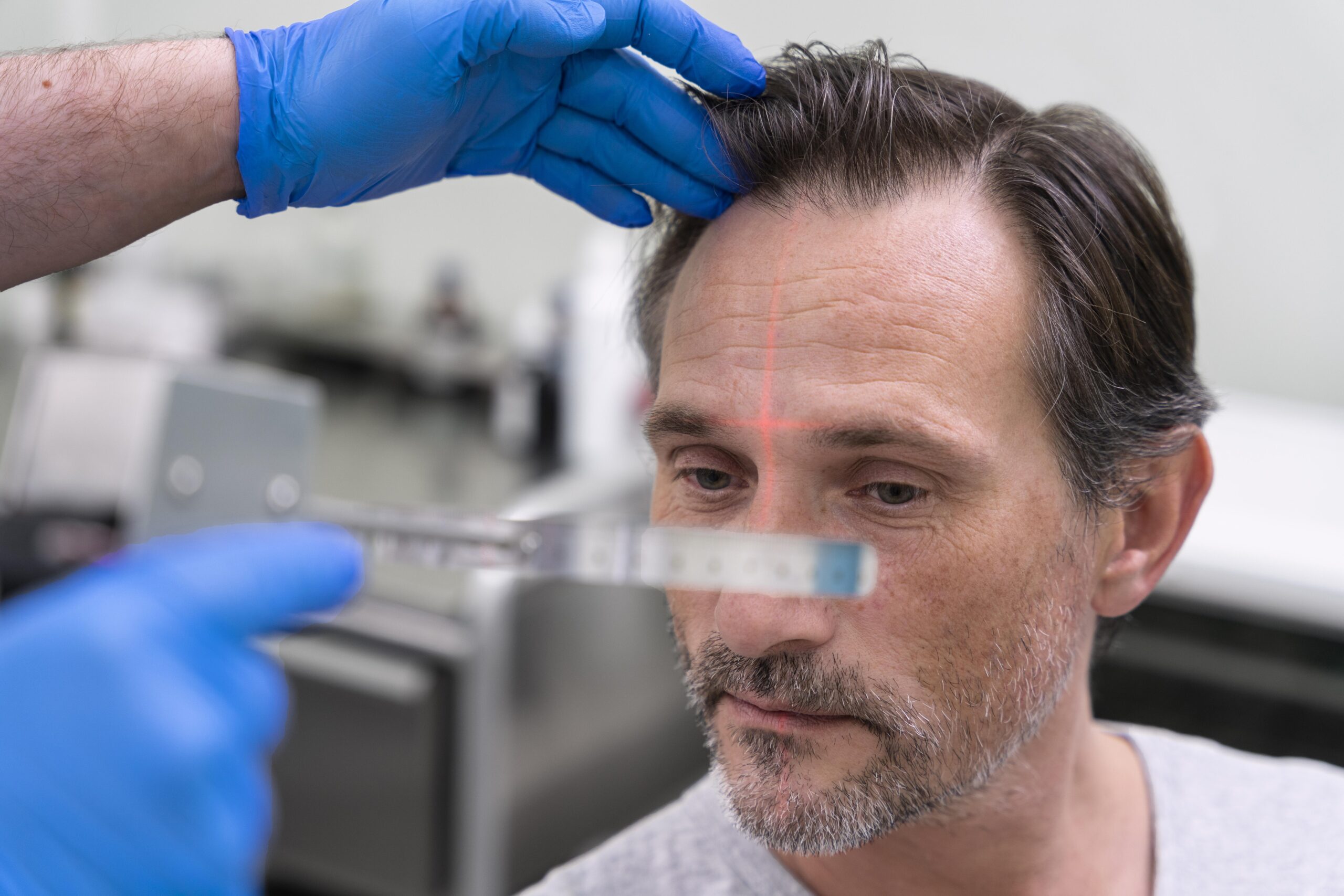
Of all the decisions made in the planning of a hair transplant, the hairline design is the one that is most visible, most permanent, and most often made too quickly. The hairline defines how the face is framed. It determines whether the result looks natural or obviously transplanted. It is the element that people see first when they look at someone’s face — and the element that, when poorly designed, announces itself as surgical rather than organic regardless of how technically excellent the procedure was in every other respect.
A hairline design consultation is the process through which the placement, shape, and detailed characteristics of the new hairline are determined before a single graft is placed. Done well, it is one of the most important components of the entire hair restoration process — a collaborative clinical and aesthetic assessment that produces a design appropriate for the individual patient’s face, age, and long-term trajectory rather than a generic template applied without sufficient individualization. Done poorly or skipped in favor of implicit decisions made on the day of the procedure, it is the starting point of results that patients spend years regretting.
This guide covers what a genuine hairline design consultation involves, what variables it must address, why each of them matters, and how patients can evaluate whether the consultation they’re receiving is actually adequate for the decisions being made.
Why Hairline Design Is Not a Simple Decision
The apparent simplicity of hairline design — you place hair where there isn’t any, at the position that looks right — conceals a genuinely complex set of interdependent decisions. Each one affects the others, and errors in any of them produce results that are either immediately apparent or that become increasingly apparent over years as the patient and their hair age.
The position of the hairline along the vertical axis of the forehead — how high or low it sits — is the decision patients most commonly want to influence, typically in the direction of lower rather than the surgeon might recommend. This decision is not simply aesthetic in the moment. A hairline placed too low for a patient in their mid-twenties may look completely natural at 26 and increasingly incongruous at 36, when the face has matured but the hairline has not. A hairline placed at the right height for the current face, for how that face will age, and for the natural position of hairlines in men at different life stages — that design continues to look appropriate across decades rather than requiring revision or accepting the increasingly anachronistic appearance of a hairline designed only for the patient’s current age.
The shape of the hairline — not just where it sits but its geometric profile across the forehead — involves equally consequential decisions. Natural male hairlines have specific characteristics that vary with age, facial structure, and individual anatomy. They are not straight lines across the forehead. They have temporal recessions that frame the face at the sides. They have a central peak or widow’s peak in some patients. They have a gentle arc that rises toward the temples rather than extending horizontally. Getting these shape characteristics right is what produces a hairline that reads as grown rather than drawn.
The density and texture of the leading edge — the transition zone — determines whether the hairline looks natural at close range. Natural hairlines don’t begin abruptly with full-density hair. They have a gradual transition from sparse single hairs at the very edge through progressively increasing density in the millimeters behind. Replicating this transition with single-hair grafts placed at appropriate angles produces a hairline that reads as natural under close inspection. Neglecting it — using multi-hair grafts at the leading edge, or placing grafts without attention to the micro-irregularity of natural hairlines — produces a result that looks transplanted at close range even when it appears acceptable from a distance.
What a Genuine Hairline Design Consultation Involves
A genuine hairline design consultation is not a brief conversation that ends with the surgeon drawing a line on the forehead before the procedure begins. It is a structured assessment that takes place before the procedure day — ideally with adequate time for the patient to consider the proposed design and ask questions — and that covers a specific set of clinical and aesthetic variables.
Facial proportion assessment is the starting point. The appropriate position and shape of the hairline is determined partly by the proportions of the face it frames. The classical thirds of the face — the forehead from hairline to brow, the midface from brow to base of nose, and the lower face from nose to chin — provide a proportional framework within which hairline position can be assessed. But these proportions are a reference, not a rule — individual faces vary significantly, and the appropriate hairline for one patient’s facial structure may be different from the geometric ideal.
The position of the frontalis muscle — the major muscle of the forehead — is an important anatomical consideration in hairline placement. Placing the hairline below the resting position of the frontalis creates the risk of a visibly unnatural hairline when the patient raises their eyebrows — the muscle movement separating the transplanted hairline from the mobile forehead skin in a way that announces the surgical origin of the hairline. Assessing the frontalis resting position — by asking the patient to relax their forehead fully — identifies the anatomical lower limit below which hairline placement becomes problematic.
Age-appropriate positioning is the variable most frequently mismanaged in hairline design consultations — and the one with the most significant long-term consequences. The appropriate hairline position for a 24-year-old is different from the appropriate position for a 40-year-old, not because the younger patient deserves less restoration but because the hairline being designed today must be evaluated against how it will look on the face and in the context of the hair pattern the patient will have in fifteen and twenty years.
For younger patients, this means placing the hairline at a position that will look appropriate as both the face and the surrounding hair mature. A very low hairline design on a young patient produces a result that looks excellent immediately — and that can look increasingly mismatched as the face ages and any continuing native hair loss changes the surrounding context. The experienced surgeon proposes a position that is appropriate for both the current and the future patient — which may be slightly higher than the patient’s instinct but is genuinely better for the ten-year result than the position the patient would choose if optimizing only for the immediate outcome.
Hairline shape assessment covers the specific geometric profile that will be appropriate for the patient’s face. This includes: the degree of temporal recession appropriate for the patient’s age and gender — since natural male hairlines have temple angles that vary significantly by these factors; the presence or absence of a widow’s peak; the width of the hairline across the forehead; and the curvature of the hairline arc from center to temples. These decisions should be made looking at the patient’s actual face with attention to their existing facial features rather than applied from a template.
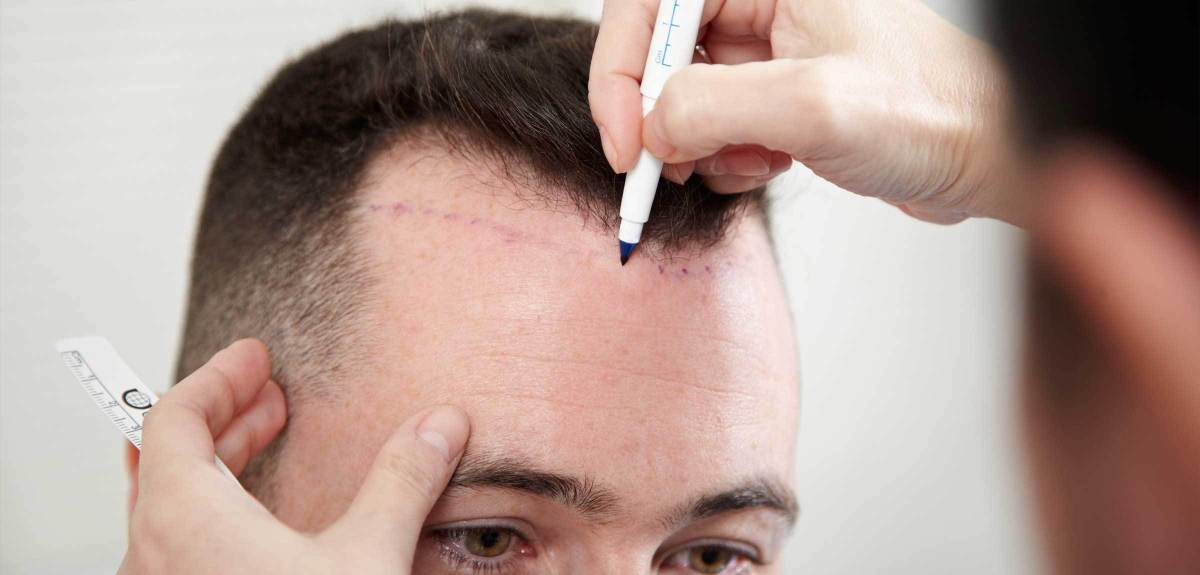
Visual demonstration before commitment is the element of hairline design consultation that most clearly distinguishes genuine assessment from cursory planning. The surgeon should draw the proposed hairline on the patient’s scalp or forehead using a surgical marker before the procedure begins — ideally in a consultation separate from the procedure day — so the patient can see exactly what is being proposed. This visual demonstration serves several critical functions: it converts abstract description into concrete visualization; it creates an opportunity for the patient to evaluate the design against their own facial features and preferences; it identifies any misalignment between surgeon and patient expectations before a single graft is placed; and it creates a reference that both parties can revisit if questions arise about the intended design.
Patients who see their proposed hairline drawn on their face for the first time immediately before the procedure begins — under the time pressure of an imminent surgery — are in a significantly weaker position to evaluate and provide feedback on the design than those who have seen it in a separate consultation with time to reflect. The best consultations provide photographic documentation of the proposed design so the patient can review it and consider it between the consultation and the procedure day.
The Transition Zone: The Detail That Makes or Breaks Naturalness
Within the hairline design, the transition zone — the leading edge where scalp becomes hair — is where the artistry of the design is most directly expressed and where technical execution most directly determines whether the result looks natural or transplanted at close range.
Natural hairlines are not walls of hair. They begin with isolated single hairs at the very edge — sparse enough that the scalp is still visible between them — before density increases progressively in the millimeters behind. This sparse leading edge covers roughly half a centimeter to a full centimeter of depth, and it is the characteristic that distinguishes genuinely natural-looking hairlines from transplanted ones that haven’t adequately replicated this feature.
In a hair transplant, recreating the transition zone requires specific decisions about graft allocation. Single-hair grafts — the smallest follicular units in the patient’s donor area — must be used exclusively at the very leading edge. Placing two or three-hair grafts here creates an abrupt density that immediately signals surgical intervention to anyone who examines the hairline closely. The progression from single-hair edge to multi-hair body must be gradual enough that no step-change in density is visible even under close inspection.
The discussion of the transition zone should be explicit in the hairline design consultation. The patient should understand that the leading edge will appear sparse in early growth because it genuinely will be sparse by design — this is the intended characteristic, not insufficient graft survival. And the surgeon should be able to articulate specifically how the transition zone will be managed in terms of graft selection and placement density.
Temporal Design: Where Hairlines Most Commonly Fail
The temples are the zone where hairline design most visibly succeeds or fails — and the zone where design errors are both most apparent and least reversible. Understanding what appropriate temporal design involves helps patients evaluate this element of the consultation specifically.
Natural male temples don’t simply extend the frontal hairline at a consistent angle across the sides of the head. They have a gradual recession that is characteristic of adult male hairlines — the angular corners that frame the forehead at the sides in young men gradually recede as men age, producing the more mature temporal recession that characterizes natural hairlines in men in their thirties, forties, and beyond. The angle and extent of this temporal recession varies between individuals, between ages, and between the specific design goals of different patients.
The most common temporal design error is extending the hairline too far laterally into the temple area — creating rounded, symmetrical temples that look unnaturally full for an adult male hairline. This “restored” temporal appearance doesn’t match how adult male hairlines actually look, and it reads immediately as transplanted to observers who may not be able to articulate why. The goal of appropriate temple design is not to maximize the extent of restoration but to create angles and recession patterns consistent with natural adult male hairlines of an appropriate age.
The implantation angle within the temple zone is equally critical. Temple hairs naturally grow at extremely acute angles — almost parallel to the skin surface — and in directions that vary across the temple area. Grafts placed at angles that don’t match native temple hair growth produce results that grow visibly wrong, pointing in directions that can’t be corrected through styling regardless of how well the graft itself survived. The consultation should include specific discussion of how the surgical team manages these precise angle requirements in the temple zones — this is one of the areas where the difference between experienced and less experienced surgical teams is most apparent.
The Role of Hair Characteristics in Hairline Design
The characteristics of the patient’s hair — caliber, texture, natural direction of growth, and color contrast with the scalp — all influence how the hairline design should be approached and what it will look like when grown.
Patients with coarse, wavy hair have a design advantage in the hairline zone: the individual hair characteristics provide more coverage per strand and more texture that helps the leading edge look soft and natural even at relatively modest graft counts. Patients with fine, straight hair need more careful attention to the transition zone management and graft density because fine hair is less forgiving of design imprecision — the leading edge must be particularly carefully graduated because fine straight hairs reveal the structure of the hairline more clearly than coarser wavy hair that creates its own textural camouflage.
Color contrast between hair and scalp affects how visible any gaps in the transition zone are. Dark hair against a pale scalp makes the structure of the transition zone visible in ways that light hair against a pale scalp does not. High-contrast patients need particularly careful transition zone management — the spacing and progression of single-hair grafts is more visible and more consequential for naturalness than in low-contrast patients where the blending effect of similar hair and scalp color provides additional forgiveness.
Natural growth direction is relevant to both the hairline zone and the temple design. The direction in which the patient’s existing hair grows — the natural recession direction in the frontal zone, the direction of existing hair in areas near the recipient zone — should inform where and how grafts are placed to ensure the transplanted hair integrates with existing hair and grows in directions consistent with the patient’s natural hair pattern.
How to Evaluate Whether a Consultation Is Adequate
Patients who understand what a genuine hairline design consultation involves are in a position to evaluate whether the consultation they’re receiving actually covers what it needs to — and to identify when the process is falling short of the standard that a permanent, high-stakes decision requires.
A consultation that moves directly from “how far back has your hairline receded?” to “we’ll need approximately X grafts” without a structured discussion of hairline position, shape, temporal design, transition zone management, and long-term trajectory is skipping the decisions that most directly determine whether the result looks natural in ten years, not just at twelve months.
A surgeon who accepts the patient’s proposed hairline position without discussion — who agrees to whatever the patient asks for without engaging with the clinical rationale for more conservative positioning in younger patients, or without examining the anatomical constraints that affect appropriate placement — is failing to provide the clinical guidance that a hairline design consultation should deliver. The patient’s aesthetic preferences are important input, but they should be informed by clinical expertise rather than simply accepted as directives.
A consultation that doesn’t involve drawing the proposed design on the patient’s face — or that does so only on the procedure day, moments before the procedure begins — doesn’t give the patient adequate opportunity to evaluate the design against their own face and preferences before committing.
The specific questions that reveal whether a hairline design consultation is substantive include: Why are you recommending this specific position rather than the one I initially indicated? How will this hairline position look in relation to my face in fifteen years? How are you managing the temple angles, and what do natural temple angles look like for someone of my age and facial structure? What is the plan for the transition zone — how will the leading edge be graduated? How do my hair characteristics — caliber, texture, color — affect this specific design?
A surgeon who can answer these questions specifically and who engages with each of them as legitimate clinical considerations is demonstrating the depth of assessment that hairline design decisions require. A surgeon who responds with generic reassurance — “don’t worry, it’ll look natural” or “we do this all the time” — without engaging with the specific questions is indicating that the decisions being made are less individualized than they should be.
The Long-Term Perspective: Designing for the Future, Not Just the Present
The most sophisticated dimension of hairline design consultation is the explicit consideration of how the designed hairline will look not at twelve months — when the twelve-month before-and-after photograph is taken — but at five, ten, and twenty years.
This long-term perspective requires understanding and acknowledging several variables that are genuinely uncertain at the time of the consultation: how the patient’s native hair loss will continue to progress, how the patient’s face will age, and how the relationship between the fixed transplanted hairline and the changing surrounding context will evolve over time.
The transplanted hairline, once established, doesn’t change. It remains in position, with the same density and shape, regardless of what happens around it. Native hair behind and beside it will continue to follow its genetic progression. The face beneath it will age. The appropriate hairline for the current face and current hair pattern may become less appropriate for the aged face and more advanced hair pattern of fifteen years later — particularly if the design didn’t account for this evolution.
Designing explicitly for the long term means: placing the hairline at a height that will look appropriate on the aged face, not just the current one; creating temporal recession angles that reflect natural adult male aging rather than maximizing the apparent extent of restoration; avoiding designs that depend on the continued presence of native hair that may not be present in ten years; and explicitly discussing how the transplanted hairline will relate to the likely evolution of the patient’s overall hair pattern.
This long-term design thinking sometimes requires managing patient expectations — explaining why the position the patient wants is not the position that will serve them best in fifteen years. This is one of the most important clinical conversations a surgeon can have, and one that distinguishes genuinely patient-centered consultation from consultation optimized for immediate patient satisfaction at the expense of long-term clinical outcomes.
At Hairpol, the hairline design consultation is a structured, dedicated component of the pre-procedure assessment — not an afterthought addressed in the minutes before the first graft is placed. Every proposed design is evaluated against the patient’s facial proportions, age and likely aging trajectory, natural hair characteristics, and long-term loss pattern, with visual demonstration of the proposed design and genuine opportunity for the patient to engage with the design before committing. Because the hairline that’s right for the twelve-month photograph and the hairline that’s right for the twenty-year result require the same level of thoughtfulness — and getting that thoughtfulness into the design before the procedure begins is what makes both results excellent.
The Bottom Line
A hairline design consultation is not a formality — it is the process through which the most visible and most permanent element of a hair transplant result is determined. Done with genuine thoroughness, it involves structured assessment of facial proportions, age-appropriate positioning, temporal design, transition zone management, and the long-term trajectory of the patient’s hair and face. Done inadequately, it leaves the most consequential aesthetic decisions of the procedure to implicit choices or patient-led preferences that may look excellent at twelve months and increasingly wrong in the years that follow.
Patients who understand what an adequate hairline design consultation involves can actively evaluate whether they’re receiving one — and can ask the specific questions that distinguish substantive individual assessment from standardized planning that doesn’t adequately account for the individual in front of the surgeon. Those questions, asked before commitment rather than after, are the most powerful tool available for ensuring that the hairline being designed is the right one for the face that will wear it — now and for the decades ahead.
Find this helpful? Add Hairpol as a preferred source on Google.
Get a Free Consultation
Answer a few questions and the medical team will review your situation.
