
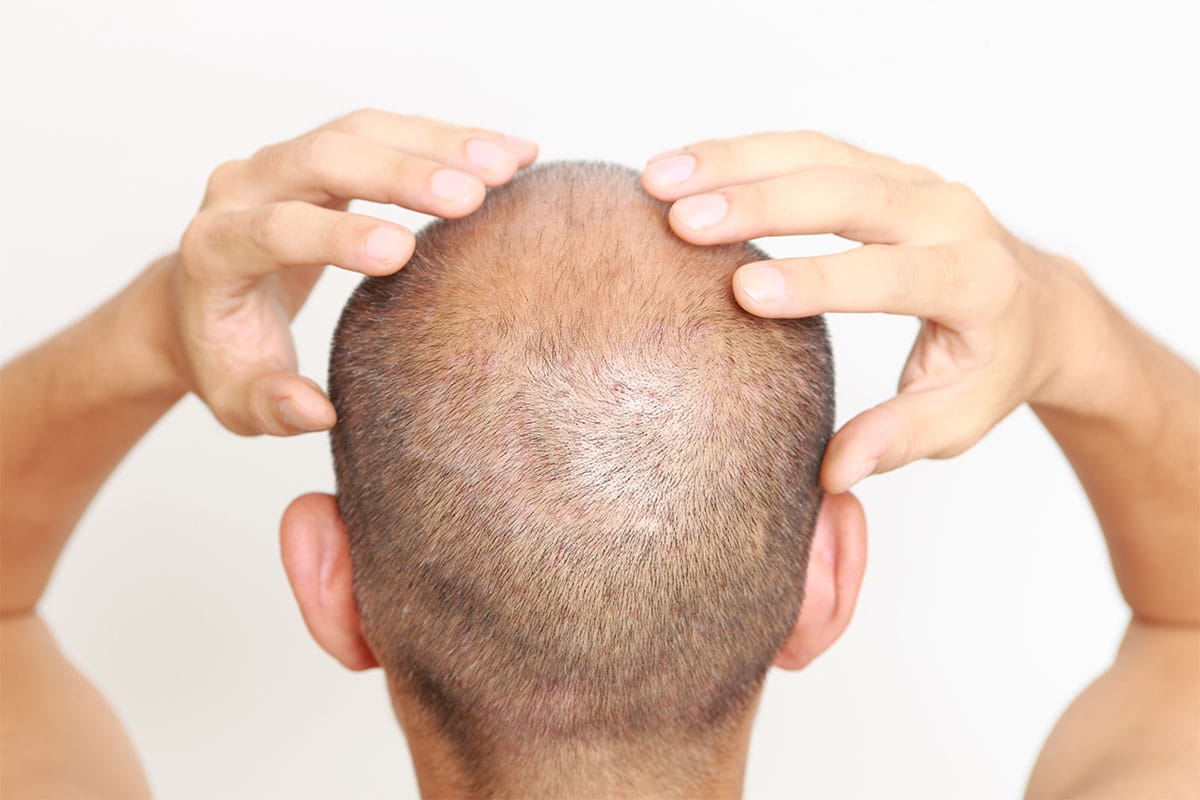
Pain is one of the first concerns that comes up when people seriously consider a hair transplant — and one of the questions most commonly answered with unhelpful generalities. “It’s not that bad.” “Most people tolerate it fine.” These reassurances aren’t false, but they don’t give prospective patients what they actually need: a specific, honest account of what the experience involves at each stage, what genuinely hurts, what doesn’t, and what to expect in the days and weeks afterward.
This guide answers the pain question specifically. What the anesthesia administration feels like. What the procedure itself involves once the scalp is numb. What the donor area feels like during recovery compared to the recipient area. What the first night is like. How discomfort evolves across the first week and beyond. And what the warning signs are that distinguish normal post-procedure discomfort from something that warrants clinical attention.
The goal is not to minimize or dramatize. It is to give you an accurate picture of what your actual experience will likely be — so you can prepare appropriately, calibrate your expectations honestly, and navigate the procedure and recovery with confidence rather than surprise.
The Most Important Thing to Understand First
The single most important context for any honest discussion of hair transplant pain is that the procedure is performed entirely under local anesthesia. The scalp is fully numb for the surgical portions of the procedure. The grafts are extracted, the recipient channels are created, and the grafts are implanted while you feel no pain in the treated areas.
This means the procedure is not painful in the way that surgical procedures without effective anesthesia would be. It is, however, not painless across the entire experience. The anesthesia administration itself involves discomfort. The length of the procedure — typically four to eight hours depending on the graft count — involves its own particular challenge of sustained positioning and inactivity. And the recovery period involves a predictable sequence of discomfort that varies between the donor and recipient areas.
Understanding what is and isn’t painful, and when, is what allows patients to approach the experience with accurate expectations rather than either the overcautious anxiety of those who imagine it as intensely painful throughout or the underprepared surprise of those who assumed it would be entirely comfortable.
The Anesthesia Administration: The Sharpest Moment of the Procedure
The anesthesia phase is consistently identified by patients as the most uncomfortable part of the entire hair transplant experience — and it deserves specific description because it is the phase for which most patients are least prepared.
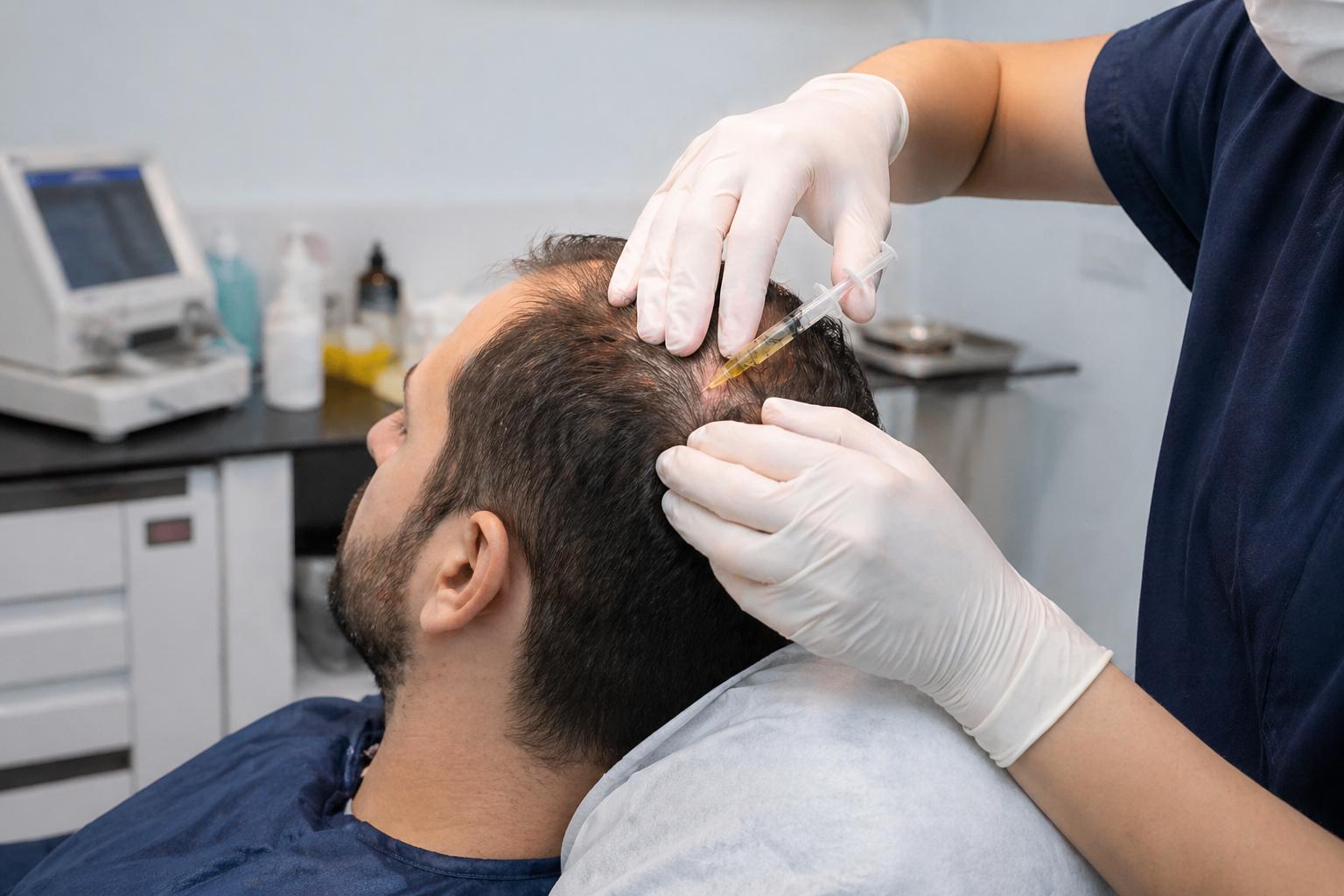
Local anesthetic — typically lidocaine, sometimes combined with epinephrine to extend the duration and reduce bleeding — is injected into the scalp using a fine needle at multiple points across both the donor and recipient areas. These injections are the mechanism by which the scalp is numbed for the subsequent surgical work, and they involve a stinging, burning sensation as the anesthetic enters the tissue.
The discomfort of the injections is real but brief at each site. Most patients describe it as a sharp sting followed by a burning sensation lasting ten to thirty seconds as the anesthetic disperses through the tissue. The scalp is relatively sensitive to injection — more so than, say, the arm or abdomen — which is why the anesthesia phase is more notable than patients who’ve had local anesthesia elsewhere might expect.
The total anesthesia administration takes roughly fifteen to thirty minutes, during which multiple injection sites are completed across the donor area and then the recipient area. By the end of this phase, the scalp is fully numb and the surgical work can proceed without pain.
Several techniques are used by experienced teams to reduce the discomfort of anesthesia administration. A dental block — nerve block injections at specific anatomical points that provide regional anesthesia before the more diffuse local injections — can significantly reduce the sensation of the subsequent injections by partially numbing the area before the more widespread infiltration. Pre-procedure oral sedation or anxiolytics — typically taken one to two hours before the procedure — reduce anxiety and can lower the perceived intensity of the anesthesia phase. And diluted anesthetic solutions delivered slowly create less pressure in the tissue than more concentrated solutions delivered quickly, reducing the burning component of the injection sensation.
Clinics that invest in anesthesia technique refinement produce meaningfully more comfortable experiences than those that treat the anesthesia phase as a brief formality rather than a clinically significant part of the procedure. Patients evaluating clinics should ask specifically about the anesthesia protocol — not as an afterthought, but as a genuine quality indicator.
During the Procedure: What Numb Feels Like
Once the scalp is anesthetized, the surgical work proceeds without pain. But “without pain” is not the same as “without sensation,” and the distinction matters for accurate expectation-setting.
A numbed scalp retains sensation of pressure, vibration, and movement — the pain signals are blocked, but the mechanical sensations of the procedure are present. During FUE extraction, patients feel the pressure of the punch instrument against the scalp and a mild vibration as each follicle is extracted. The pressure is detectable but not uncomfortable — more analogous to someone pressing firmly on the scalp than to anything painful. During recipient channel creation, patients feel pressure and movement. During implantation, a similar pressure sensation accompanies each graft placement.
None of these sensations are painful when the anesthesia is properly maintained. If the anesthesia begins wearing off in any area — which can happen during longer procedures — the return of sensitivity is detectable as increased pressure sensation or mild discomfort before it becomes genuinely painful. Patients should communicate this to the surgical team immediately; top-up injections of anesthetic restore numbness quickly and allow the procedure to continue comfortably.
The more significant challenge of the procedure duration is not pain but the physical demand of sustained positioning. FUE extraction requires the patient to lie face-down on the procedure table for the donor area phase — which can last two to four hours depending on the graft count. The neck, shoulders, and lower back bear the strain of this positioning for extended periods, and most patients find this postural fatigue more notable than anything involving the scalp itself.
Good clinics account for this by providing comfortable procedure tables with appropriate head and face support, scheduling breaks during the extraction phase to allow position changes, and checking in regularly on patient comfort beyond the scalp-specific components of the procedure. The physical comfort of the procedure table and the management of positioning fatigue are quality-of-experience factors that vary between clinics and that significantly affect how patients remember the overall experience.
The Donor Area During the Procedure: FUE-Specific Sensations
In Sapphire FUE and standard FUE, the donor area extraction phase involves the punch instrument creating circular incisions around each follicular unit. Under adequate anesthesia, patients feel the pressure of the punch against the scalp — a distinct sensation with each extraction that some patients describe as a mild popping feeling as the punch completes its rotation through the tissue.
This sensation is not painful but is noticeable enough that patients who weren’t told to expect it can find it surprising. Understanding in advance that each extraction involves a specific, brief pressure sensation rather than a smooth, undifferentiated experience makes the actual procedure feel much more familiar when it begins.
In DHI, the implantation phase uses the Choi pen in a similar way — each graft placement involves a specific pressure sensation as the pen creates the channel and deposits the graft simultaneously. The overall sensation profile is similar to FUE extraction, with individual detectable pressure events rather than continuous undifferentiated pressure.
The First Night: What to Expect
The first night after a hair transplant is, for many patients, the most physically uncomfortable part of the overall experience. The anesthesia has worn off. The scalp is in its acute post-procedural state. And the requirements of careful positioning for sleep add their own challenge.
Discomfort in the donor area typically begins as the anesthesia fades — usually three to five hours after the procedure concludes. The donor area soreness is described by most patients as a diffuse aching or throbbing sensation, similar to the feeling of a firm brush burn or the muscle soreness that follows a particularly intensive physical activity. It is not sharp or intense under normal circumstances, but it is present and detectable enough to affect sleep quality for most patients on the first night.
The recipient area typically produces less discomfort than the donor area on the first night. The incisions from channel creation are smaller and shallower than the extraction wounds of the donor area, and the acute sensitivity tends to be lower. Some patients describe a tight, slightly tender feeling in the recipient area rather than the more distinct soreness of the donor zone.
Prescribed pain medication — typically a standard non-opioid analgesic like ibuprofen or paracetamol, sometimes supplemented with a short course of something stronger for the first night — manages the first-night discomfort effectively for most patients. Patients who take their pain medication proactively — before the discomfort becomes significant rather than waiting until it’s already uncomfortable — consistently report better first-night experiences than those who wait.
Sleeping position on the first night requires specific attention. Lying flat increases blood flow to the scalp, which can increase swelling and discomfort. Most clinics recommend sleeping with the head elevated — typically at a 45-degree angle, either in a recliner or with multiple pillows supporting the upper body — for the first three to five nights. This elevation reduces swelling and makes the first night meaningfully more comfortable. The logistical challenge of sleeping in this position is real and worth preparing for — having the right pillow arrangement ready before the procedure day reduces one source of first-night difficulty.
The Donor Area Recovery: Days One Through Seven
The donor area at the back and sides of the scalp is where most patients experience the most noticeable discomfort during the first week of recovery — and understanding specifically what this feels like, and how it evolves, helps patients calibrate their experience against what is normal.
On days one and two, the donor area soreness is typically at its most pronounced. The extraction wounds are fresh, the tissue is responding with its normal inflammatory reaction, and the scalp feels sensitive and tender to touch. The tightness of the skin in the donor area — which has a slightly different sensation from the recipient zone — can make it uncomfortable to move the head in certain directions if those movements stretch the donor area skin.
By days three and four, the acute soreness of the donor area begins to settle. The skin remains tender, but the diffuse aching quality of the first days transitions to a more localized sensitivity at the extraction sites themselves. Patients often describe this as feeling similar to the day after a mild sunburn — sensitive to touch but not producing ongoing pain without contact.
Through days five to seven, the donor area soreness continues to diminish and for most patients is largely resolved by the end of the first week. Some patients have residual sensitivity in the donor zone that persists into the second week, particularly in areas of higher extraction density, but this is typically mild enough to be easily managed without medication.
One specific sensation worth noting in the donor area recovery is itching — particularly from days three to seven as the extraction sites heal. This itching can be intense enough to be distracting, and the temptation to scratch the donor area is one of the challenges of the first week. Scratching risks damaging the healing sites and introducing bacterial contamination into the small wounds. Managing donor area itching without scratching — using gentle patting, cool compresses, or antihistamines if prescribed — is one of the practical management skills of the first week.
The Recipient Area Recovery: A Different Sensation Profile
The recipient area — the scalp where grafts were implanted — produces a different quality of discomfort from the donor area, and it is worth describing specifically because patients who expect the two areas to feel the same are often surprised by how different the sensation profiles are.
The recipient area typically produces less soreness than the donor area during the first days of recovery. The implantation channels are smaller wounds than the extraction sites, and the acute post-procedural sensitivity is lower. What patients more commonly notice in the recipient area during the first week is tightness — a feeling that the scalp skin is stretched or under mild tension — and a low-grade sensitivity to touch that doesn’t rise to the level of soreness in the way the donor area does.
The recipient area does produce its own characteristic recovery sensation: tingling and numbness that can persist for weeks to months after the procedure. This altered sensation — sometimes described as a pins-and-needles quality, sometimes as patches of numbness — reflects the disruption of small surface nerves during the channel creation and implantation process. These nerves regenerate gradually over weeks to months, and the tingling and numbness resolves as they do.
For some patients, this altered recipient area sensation is more notable than any discomfort per se — not painful, but strange enough to be attention-catching. Understanding that it reflects nerve regeneration in progress rather than anything going wrong makes it significantly easier to manage psychologically.
The recipient area itching, which typically begins around days three to five, is in some ways the most practically challenging aspect of the recipient zone recovery. The scalp is healing, scabs are forming around each graft site, and the biological response to healing skin produces itching that can be intense. But scratching or rubbing the recipient area during the first two weeks risks dislodging grafts that are still in the process of integrating into surrounding tissue — which is why resisting the itching, rather than managing it through scratching, is one of the most important behavioral requirements of early recovery.
Swelling: The Most Surprising Aspect of Recovery for Many Patients
Forehead and facial swelling following a hair transplant is one of the recovery experiences that surprises patients most frequently — both because they weren’t told to expect it specifically and because its appearance can be alarming when it occurs.
The anesthetic solutions injected into the scalp contain volume — fluid that initially distributes through the scalp tissue and then, over the following days, migrates downward under gravity. By days two to four for most patients, this migrating fluid accumulates in the forehead and, in some cases, the periorbital area around the eyes. The result can be noticeable — sometimes significant — swelling in these areas that looks nothing like what patients expected from a scalp procedure.
This swelling is normal, temporary, and resolves spontaneously within days four to seven for most patients as the fluid is absorbed. It is not a sign of complications or allergic reaction. But it is a visual change that can be dramatically unexpected for patients who weren’t told about it, and it is sometimes uncomfortable — particularly when periorbital swelling is present, as the tightness and heaviness around the eyes is noticeable even without being painful.
Head elevation during sleep — the same recommendation that reduces first-night scalp discomfort — also significantly reduces the severity of forehead swelling by reducing the gravitational pressure that drives fluid migration. Cold compresses applied to the forehead (not the recipient area) can help manage swelling and associated discomfort. And knowing in advance that this is coming makes the experience of encountering it dramatically less distressing than encountering it as a surprise.
Pain Medication and Management: What to Expect to Be Prescribed
The pain management protocol after a hair transplant varies between clinics but typically follows a predictable framework that matches the expected pain profile of the recovery period.
For the first night and first one to two days — the period of most pronounced donor area soreness — most clinics prescribe or recommend a combination of anti-inflammatory medication and analgesics. Ibuprofen is commonly included for its anti-inflammatory as well as analgesic properties. For the first night specifically, some clinics prescribe a stronger analgesic for patients who are more sensitive to pain, or for procedures with higher graft counts that involve more extensive donor area harvesting.
Beyond the first two to three days, most patients find that over-the-counter analgesics like paracetamol or ibuprofen are fully sufficient for managing any residual donor area sensitivity. The recovery pain profile is front-loaded — the most significant discomfort occurs in the first one to two days and diminishes progressively, with most patients requiring no medication at all by the end of the first week.
One important medication to note in the context of pain management is aspirin — which should be avoided before and shortly after the procedure because of its blood-thinning effects. Patients who take aspirin regularly should discuss this with their clinic before the procedure, as the timing of stopping and restarting aspirin around the procedure needs to be managed appropriately.
When Discomfort Is Not Normal: Warning Signs
The overwhelming majority of post-procedure discomfort falls within the range of normal and expected recovery. But certain characteristics of pain or discomfort after a hair transplant warrant contact with the clinic rather than simple management.
Increasing rather than decreasing pain after the first two to three days is a warning sign. The normal trajectory of recovery discomfort is progressive improvement. Pain that worsens after the initial peak — or that improves and then suddenly increases — can indicate infection or another complication that requires clinical assessment.
Localized severe pain in a specific area of the donor or recipient zone, particularly if accompanied by increased warmth, redness beyond the expected post-procedural redness, or unusual discharge, can indicate a developing infection at that site. Infected healing wounds require prompt treatment — antibiotics and sometimes debridement of the affected area — and should not be managed with over-the-counter pain medication alone.
Persistent severe headache — distinct from the diffuse scalp soreness of normal recovery — can occasionally reflect elevated scalp tension or other complications and should be discussed with the clinic if it doesn’t respond to standard analgesics.
Numbness or tingling that extends beyond the scalp — into the face, ears, or neck in ways that seem disproportionate to the expected altered sensation of scalp nerve recovery — is worth flagging with the clinic for assessment.
In practice, these warning signs are uncommon. Most patients navigate their recovery without encountering anything outside the expected discomfort profile. But knowing what to watch for — and knowing that the clinic should be the first contact when something seems wrong rather than a last resort — is part of being well-prepared for the recovery period.
Factors That Influence Individual Pain Experience
Individual variation in pain perception is significant, and patients who understand the factors that influence their specific experience can prepare more effectively.
Anxiety and psychological state have well-documented effects on pain perception. Patients who approach the procedure with high anxiety consistently report more uncomfortable experiences than those who are calm and well-informed — not because the procedure is different, but because anxiety amplifies the subjective experience of painful stimuli. This is one of the most practically significant reasons why thorough pre-procedure information — like this guide — genuinely reduces the pain experience: reducing uncertainty reduces anxiety, and reduced anxiety reduces perceived pain.
Graft count affects both the duration of the procedure and the extent of donor area harvesting — both of which have direct implications for recovery discomfort. Higher graft counts mean more extraction sites in the donor area, more extensive recipient channel creation, and a longer procedure with more sustained positioning. Patients undergoing larger procedures should calibrate their recovery expectations accordingly.
Individual pain sensitivity varies significantly between people and is influenced by genetics, prior pain experiences, and baseline pain thresholds that differ between individuals. The range of reported experiences with hair transplants reflects this genuine variation — some patients describe the procedure as significantly less uncomfortable than they expected, while others find it more challenging than average descriptions suggested. Both ends of this range can represent normal experiences.
Donor area characteristics affect recovery discomfort. Patients with tighter scalp skin — lower scalp laxity — often experience more tension and tightness in the donor area during recovery than those with more lax scalps. The density of extraction relative to the available donor zone also affects how the donor area feels during healing — more densely harvested areas have more extraction sites per unit area and can feel more intensely sore than more conservatively harvested zones.
Managing the Experience: Practical Preparation
Several practical preparation steps meaningfully reduce the discomfort of the procedure and recovery beyond what the clinical protocol alone provides.
Taking any prescribed pre-procedure medication — anxiolytics or sedatives — exactly as instructed and at the right time before the procedure ensures they’re at therapeutic levels when the anesthesia phase begins. Missing the timing window makes the anesthesia phase more uncomfortable than it needs to be.
Arranging comfortable head elevation for sleep before the procedure day — testing pillow arrangements or recliner positions before you need them — removes the logistical stress of figuring this out when you’re already tired and uncomfortable on the first night.
Taking prescribed pain medication proactively during the first day rather than waiting until discomfort is significant prevents the pain from becoming more pronounced than it needs to be. Managing pain from ahead is more effective than catching up to it once it’s established.
Arranging appropriate time off and social commitments to allow rest during the first week reduces the stress of managing recovery alongside normal obligations — which itself reduces the perception of recovery discomfort. Most patients benefit from at least three to five days before returning to work, and more for physically demanding work.
At Hairpol, the pre-procedure consultation specifically covers the pain and discomfort experience because patients who know what to expect genuinely experience less distress — not as a platitude, but as a documented effect of accurate expectation-setting on pain perception. A hair transplant is not a painless procedure, but it is a manageable one — for patients who go in knowing specifically what they will feel, when they will feel it, and what to do about it.
The Honest Summary
The pain picture of a hair transplant, honestly presented, looks like this: the anesthesia administration is the sharpest moment and the one most patients remember as the most uncomfortable. The procedure itself under adequate anesthesia is not painful but involves detectable pressure sensations and significant postural fatigue from prolonged face-down positioning. The first night brings donor area soreness as anesthesia wears off — manageable with prescribed medication and head elevation. The first three to five days involve progressive donor area sensitivity and recipient area itching, both of which diminish over the first week. By week two, most patients are managing discomfort that no longer requires medication.
This is not a description of a painful experience by the standards of surgical procedures. It is an honest description of what to expect — the specific sensations, the timeline, the management strategies, and the warning signs. For a permanent result that changes how you look and feel for decades, most patients find that the experience, accurately understood in advance, is well within what they were prepared to go through.
Find this helpful? Add Hairpol as a preferred source on Google.
Get a Free Consultation
Answer a few questions and the medical team will review your situation.
