
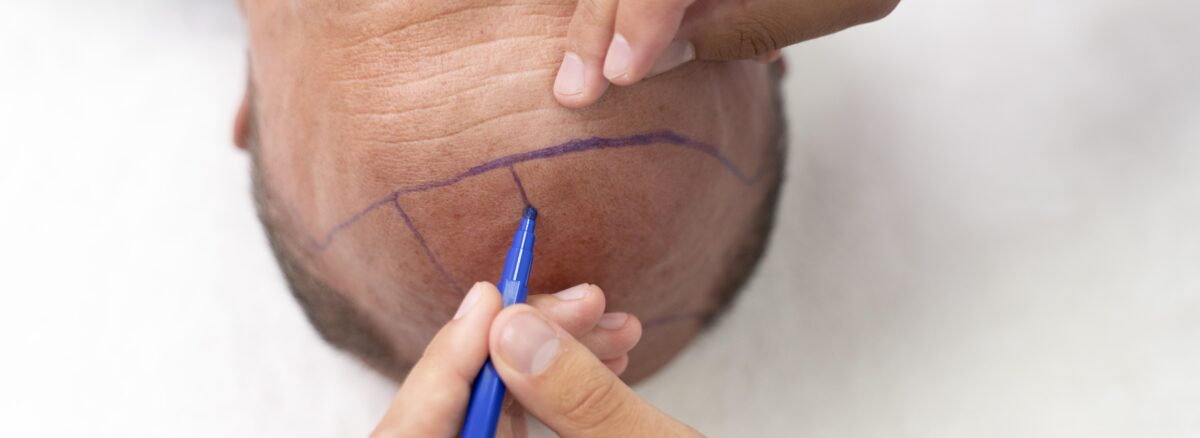
Most people don’t notice a good hair transplant. They notice a bad one immediately.
It might be a hairline that looks drawn on. Density that feels heavy and stiff. Hair that grows in strange directions or looks disconnected from the rest of the head. Even people who know nothing about hair transplantation can usually sense when something feels “off.”
This is why the fear of a fake-looking result is so common. And it is justified. Not every hair transplant looks natural, even if hair grows successfully.
At Hairpol, patients often ask the same question in different ways.
“How do I avoid an artificial look?”
“Why do some transplants look obvious?”
“What actually goes wrong?”
The answer almost always comes down to design, not technique.
Fake-looking results are usually design problems, not medical failures
When people hear that a hair transplant looks fake, they often assume something went medically wrong. Infections, poor graft survival, or healing issues.
In reality, many fake-looking results involve healthy grafts that grow exactly as expected. The problem is not that the hair failed to grow. It is that it was placed in a way that does not match how hair naturally exists.
Hair transplantation is both medical and aesthetic. When the aesthetic side is rushed, simplified, or ignored, the result may function biologically but fail visually.
The most common mistake: straight and sharp hairlines
The hairline is the most exposed and emotionally charged part of a hair transplant. It is also where mistakes are easiest to spot.
One of the most common design errors is creating a hairline that is too straight, too sharp, or too symmetrical. Natural hairlines are irregular. They have micro-breaks, subtle asymmetry, and gradual transitions.
A perfectly straight line may look clean in photos, especially right after surgery. In real life, it looks artificial.
At Hairpol, hairlines are designed to blend, not define. The goal is to let the face lead and the hairline follow quietly.
Hairlines that are too low for the patient’s age
Another frequent mistake is designing a hairline that sits too low on the forehead.
This often happens because patients want to “get everything back.” Clinics sometimes agree without considering how the face will age or how surrounding hair may continue to thin.
A low hairline on a young face may look acceptable initially. Ten years later, it can look unnatural, heavy, or disconnected from the rest of the scalp.
Natural results age well. Fake-looking results usually do not.
At Hairpol, hairline height is chosen with long-term balance in mind, not short-term impact.
Overcrowding grafts in the front
Many artificial-looking transplants suffer from excessive density at the very front.
The idea sounds logical. More grafts should look fuller. But the frontal hairline is not meant to be dense. It is meant to be soft.
When too many grafts are packed into the front line, hair loses movement. It may stand stiffly or cast unnatural shadows on the scalp. In motion, it often looks heavy or “plugged.”
Natural density builds gradually. The eye should not hit a wall of hair at the front.
Ignoring hair direction and angle
Hair does not grow straight out of the scalp. It follows specific angles that vary across different areas.
When grafts are implanted without respecting natural direction, hair may grow upward, sideways, or inconsistently. This becomes obvious when hair grows longer or is styled.
This mistake often goes unnoticed in early photos, but becomes very clear in real life.
At Hairpol, graft direction is planned with growth behavior in mind, not just placement speed.
Using the same design for every patient
Some clinics reuse the same hairline shape and density pattern for nearly everyone. This creates a recognizable “signature look.”
Faces are not identical. Neither are foreheads, bone structure, or aging patterns.
When the same design is applied universally, results start to look generic rather than personal. And generic results often look fake.
A natural hair transplant should feel custom-made. If it looks familiar across different patients, something is wrong.
Poor transition between transplanted and existing hair
Another common issue is a harsh transition between transplanted areas and native hair.
This happens when density changes abruptly or when existing hair is not considered during planning. The result may look fine when hair is short, but uneven or patchy as it grows.
Blending matters more than coverage.
At Hairpol, existing hair is treated as part of the design, not an obstacle to work around.
Chasing numbers instead of harmony
Some fake-looking transplants come from an obsession with graft numbers.
High graft counts are often marketed as a sign of quality. In reality, excessive graft usage can compromise blood supply, reduce survival rates, and create unnatural density patterns.
The human eye does not measure grafts. It measures harmony.
Natural results come from placing hair where it visually matters, not filling every available space.
Technique does not save poor design
Techniques like Sapphire FUE and DHI are powerful tools, but they do not guarantee natural results.
A poorly designed hairline using the most advanced technique will still look artificial. A well-designed plan using basic principles can look far more natural.
At Hairpol, technique is selected after design is finalized. The plan always comes first.
When patients unintentionally contribute to fake results
Sometimes, patients push for decisions that increase the risk of unnatural outcomes.
Requests for very low hairlines, extreme density, or copying someone else’s result can all lead to disappointment.
A responsible clinic pushes back when necessary. Saying no is sometimes the most professional decision.
At Hairpol, consultations often involve slowing expectations down rather than amplifying them.
Why fake results stand out more in real life
Artificial-looking hair transplants become more noticeable over time, not less.
As hair grows longer, as lighting changes, as facial features age, design mistakes become harder to hide. This is why some patients feel satisfied early on and uncomfortable years later.
Natural results improve with time. Fake ones age poorly.
How to avoid an unnatural hair transplant
Avoiding a fake-looking result starts before surgery.
Pay attention to how a clinic talks about design, not just results. Look for discussions about age, future hair loss, and long-term planning.
Ask how hairlines are customized. Ask how density is managed. Ask how existing hair is protected.
A clinic that focuses on restraint and balance is more likely to deliver natural outcomes.
When a hair transplant truly looks real
A hair transplant looks real when it does not draw attention.
When people comment that you look rested, healthier, or different in a way they cannot quite explain.
When barbers do not question it.
When friends stop asking about it.
When you stop thinking about hair loss altogether.
At Hairpol, that quiet success is the goal.
Because the best hair transplant is not the one that looks impressive.
It is the one that looks like it was never done.
Frequently Asked Questions (FAQ)
Why do some hair transplants look fake even when hair grows?
Because the issue is usually design, not growth. Hair can grow successfully but still look artificial if the hairline is too straight, density is excessive, or angles are incorrect.
Is a fake-looking hair transplant a medical failure?
Not necessarily. Many unnatural results involve healthy grafts. The failure is often aesthetic, caused by poor planning rather than medical complications.
What is the most common design mistake in hair transplants?
The most common mistake is a straight and sharp hairline. Natural hairlines are irregular and gradual, not perfectly symmetrical.
Can too much density make a hair transplant look unnatural?
Yes. Overcrowding grafts, especially at the front, can make hair look stiff and heavy. Natural density builds gradually, not all at once.
Why does hair direction matter so much for natural results?
Do advanced techniques like Sapphire FUE or DHI prevent fake results?
No technique guarantees natural results on its own. Even advanced methods can look artificial if the design and planning are poor.
Can a hair transplant look natural at first but fake later?
Yes. Some design mistakes become more visible over time as hair grows longer, lighting changes, and facial features age. Natural designs age better.
How can I reduce the risk of an unnatural hair transplant?
Choose a clinic that prioritizes custom design, conservative planning, and long-term balance, rather than aggressive hairlines or high graft numbers.
