
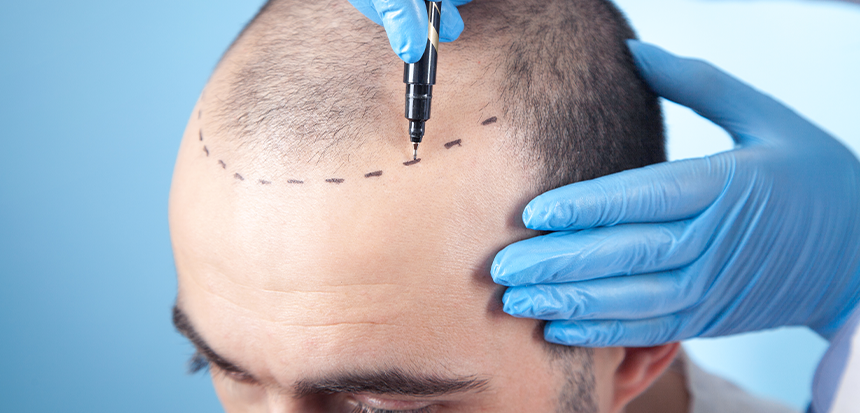
If you’ve spent even a week researching a hair transplant, you’ve probably noticed something strange. Two people can have the same procedure, the same number of grafts, and even the same method, yet one feels thrilled and the other feels disappointed.
A lot of that gap comes down to expectations. Not whether someone is “positive” or “negative,” but whether their expectations match how hair restoration actually works in real life.
The issue is that expectations around a hair transplant are shaped by marketing, social media, edited before–after photos, and simplified promises like “permanent” or “one session.” Many patients walk in expecting a quick, dramatic makeover and walk out confused when the process is slower, messier, and more personal than they imagined.
This article explains why hair transplant expectations are misunderstood so often, what people commonly expect that isn’t realistic, and how to set expectations that lead to a result you’ll actually feel good about throughout the hair transplant timeline.
The Biggest Reason: People Think It’s Instant
The most common misunderstanding is timeline-related. Patients expect to look better immediately, or at least within a few weeks. But a hair transplant is not like a haircut or a cosmetic filler. It’s a surgical relocation of follicles that must heal, shed, and then grow again.
The Hair Transplant Timeline Is Slow by Nature
A realistic hair transplant timeline includes phases that can feel emotionally confusing:
- early healing with redness and scabbing
- a shedding phase where hair looks thinner
- a quiet period where growth seems slow
- gradual regrowth and thickening over months
Because these phases are rarely explained honestly in marketing content, patients interpret normal stages as problems. They feel like something is wrong when, medically, everything is on track.
If your expectations ignore the hair transplant timeline, you’re almost guaranteed to feel disappointed at some point, even with a good final result.
Social Media Creates “Perfect Lighting Expectations”
Before–after photos are powerful, but they also create a distorted standard. Many photos are taken:
- under flattering light
- with styled hair and fibers
- at angles that hide weaknesses
- after the hair is cut and shaped strategically
In real life, you don’t live in perfect lighting. You live in overhead office lighting, sunlight, rainy weather, and messy mornings.
A natural-looking hair transplant should look good across conditions, not only in a perfect photo. But when expectations are built on perfect photos, normal reality can feel like underperformance.
People Assume “More Grafts” Means “Better Result”
Graft numbers are easy to market. They feel measurable. But graft counts don’t guarantee visual density or natural aesthetics.
Two people can receive the same number of grafts and have completely different outcomes because of:
- hair thickness and caliber
- curl or wave pattern
- color contrast between hair and scalp
- donor density quality
- scalp laxity and healing response
A successful hair transplant is not a receipt. It’s a design project. And design depends on your natural features.
If expectations are built around a number, patients often feel misled when the mirror doesn’t match the number.
The Hairline Myth: “I Want My Old Hairline Back”
This is one of the most common expectation traps. People bring photos from their teens or early 20s and want that exact line restored.
But a hairline is not just a line. It’s part of facial proportions and age.
An overly low hairline can look unnatural later, especially if native hair continues thinning behind it. This is how people end up with a hairline that is technically full but visually suspicious.
A natural hair transplant hairline is designed to look believable now and to still make sense years from now. That often means a slightly conservative placement that patients may not initially want, but later appreciate.
People Confuse “Permanent” With “Done Forever”
Another major misunderstanding is the word “permanent.” A hair transplant can be permanent in the sense that transplanted follicles are usually resistant to genetic hair loss.
But surgery does not stop your native hair from thinning.
So what happens?
- transplanted hair grows and stays
- native hair around it may continue to thin
- the overall look can change over years
Patients often interpret future thinning as the transplant “not lasting,” when the reality is progression of untreated hair loss.
If you don’t plan for this, you might expect a one-time solution and feel frustrated later. A good plan acknowledges that hair loss can continue, and it protects donor supply and design so the look stays balanced long-term.
The “One Session Fixes Everything” Expectation
Many clinics market hair transplant in Turkey as a single trip, single session, complete transformation. Sometimes, that can be true for mild to moderate cases with strong donor capacity and realistic goals.
But not everyone can or should aim for “everything in one session.”
Reasons one session may not be enough include:
- advanced hair loss (large bald areas)
- limited donor density
- a crown that needs separate planning
- diffuse thinning that needs conservative strategy
- the goal of natural density rather than extreme density
If you expect “one and done” when your pattern requires staged planning, you may feel disappointed even though the procedure was done correctly.
People Underestimate How Much Hair Characteristics Matter
This is a quiet but massive expectation gap.
Hair results are not only about the surgeon. Your natural hair characteristics strongly shape what “good” looks like.
Factors that influence visual density include:
- thick hair vs fine hair
- straight vs curly hair
- dark hair on light scalp vs low contrast
- coarse texture vs soft texture
A person with thick, wavy hair can look dense with fewer grafts. A person with very fine hair may need more grafts to create similar visual coverage. This isn’t unfair. It’s just biology.
Patients often misunderstand this and assume that anyone can achieve the same density if the clinic is good enough.
People Expect Symmetry Like a Graphic Design File
Many patients become hyper-focused on symmetry after surgery. They want both sides identical, the hairline perfectly even, and density mirrored left to right.
Natural hairlines are not perfectly symmetrical. Real faces are not perfectly symmetrical. A perfectly straight, perfectly symmetrical hairline can actually look more artificial than a slightly irregular one.
A natural-looking hair transplant often includes micro-irregularities that reduce that “done” appearance.
When patients expect perfection, they may interpret natural design as a flaw.
People Misread Early Results and Panic
Early months are emotionally intense. People see shedding, shock loss, uneven growth, and they assume the transplant failed.
This is where misunderstandings explode, because patients often aren’t taught what “normal” looks like at each stage of the hair transplant timeline.
Common panic points include:
- transplanted hairs shedding (often normal)
- native hairs shedding near the area (shock loss, often temporary)
- uneven growth rates across zones (common)
- hair texture feeling wiry early on (often improves with maturation)
If your expectations assume linear growth and instant fullness, the early phase will feel like chaos.
People Think a Transplant Automatically Fixes Confidence
This is sensitive, but it matters.
Many patients expect the transplant to solve deeper confidence struggles. Sometimes it helps massively. But confidence is not only hair. It’s also:
- how you perceive yourself
- how you handle attention
- how you deal with aging and change
- how you respond to imperfections
If someone expects a hair transplant to fix everything emotionally, they may be disappointed even when the result is objectively good.
The healthiest expectation is that a transplant can reduce one source of stress. It can help you feel more like yourself. But it won’t rewrite your entire self-image overnight.
Marketing Language Creates Unrealistic Standards
Certain phrases create unrealistic expectations because they sound absolute:
- “guaranteed”
- “perfect”
- “maximum density”
- “no shedding”
- “instant results”
- “permanent solution”
Real outcomes are rarely absolute. Healing varies. Growth varies. Density varies. Even two procedures performed by the same team can look different because the human body isn’t a machine.
A successful hair transplant is usually not a fantasy outcome. It’s a realistic improvement that looks natural and holds up over time.
How to Set Expectations That Actually Lead to Satisfaction
The most satisfied patients usually have expectations like these:
- I want a natural-looking hair transplant, not a dramatic, artificial hairline
- I accept that the hair transplant timeline takes months, not weeks
- I understand shedding can happen before growth
- I know my hair characteristics influence final density
- I want long-term balance, not instant perfection
- I’m willing to preserve donor grafts for future needs if necessary
When expectations are realistic, the same result feels better psychologically because it matches what you were prepared for.
What Hairpol-Style Expectation Setting Should Feel Like
For Hairpol content and patient education, expectation setting should be clear and grounded:
- no miracle promises
- honest explanation of phases
- emphasis on natural design
- realistic density planning
- long-term thinking about progression
- support through the emotional stages
The best sign of a strong clinic is not only great results, but great preparation. Patients who understand the process suffer less anxiety and make fewer mistakes during recovery.
The Most Honest Reason Expectations Get Misunderstood
Because people want certainty, and hair restoration is a process.
A hair transplant isn’t a single moment. It’s healing, shedding, waiting, regrowth, thickening, and gradual maturation. When you expect a quick switch from “before” to “after,” you’re setting yourself up to feel confused.
If you align your expectations with the real hair transplant timeline, you won’t interpret normal stages as failure. You’ll recognize them as part of the journey.
And that’s when a hair transplant becomes what it’s supposed to be: not a stressful mystery, but a planned transformation that looks natural, feels believable, and holds up in real life.
Frequently Asked Questions (FAQ)
Why are hair transplant expectations so often misunderstood?
Hair transplant expectations are often misunderstood because they are shaped by marketing, social media, edited before–after photos, and simplified promises like “permanent” or “one session.” This can lead patients to expect a faster, smoother, and more dramatic result than real hair restoration usually provides.
Why do so many people think hair transplant results should be instant?
Many people expect quick improvement because they compare a hair transplant to cosmetic treatments with immediate visual change. In reality, transplanted follicles need time to heal, shed, rest, and then grow again, which is why the process unfolds over months rather than weeks.
Does getting more grafts automatically mean a better result?
No. Graft numbers do not automatically guarantee better density or a more natural look. Final appearance also depends on hair caliber, curl pattern, scalp-to-hair contrast, donor quality, healing response, and overall design strategy.
Why is asking for your old hairline back not always realistic?
A teenage or very low hairline may not age naturally over time, especially if native hair continues thinning behind it. A good natural-looking hair transplant hairline is designed to suit your face, your age, and your long-term hair loss pattern rather than simply copying an earlier version of you.
Does “permanent” mean a hair transplant solves everything forever?
Not exactly. “Permanent” usually refers to the transplanted follicles being more resistant to genetic hair loss, but it does not mean native hair will stop thinning or that one procedure will keep the same overall look forever. Long-term balance still depends on planning and progression.
Why do patients panic during the early hair transplant timeline?
Patients often panic because early healing can include redness, scabbing, shedding, shock loss, uneven growth, and strange hair texture. If these normal stages are not explained clearly, people may interpret them as signs of failure even when the transplant is progressing normally.
Can a hair transplant automatically fix confidence issues?
A hair transplant can reduce one major source of stress for many people, but it does not automatically solve every self-image or confidence issue. Confidence also depends on how a person sees themselves, handles attention, and responds to change and imperfection.
What kind of expectations usually lead to the most satisfaction?
The most satisfying expectations are usually realistic ones: wanting a natural-looking hair transplant, accepting that the hair transplant timeline takes months, understanding that shedding can happen before regrowth, and focusing on long-term balance rather than instant perfection.
