

Safety is one of the first questions patients ask when seriously considering a hair transplant — and one of the questions most commonly answered with either blanket reassurance or exaggerated alarm. Neither serves patients well. The honest answer is that hair transplantation, when performed by qualified surgeons in appropriate clinical settings, is among the safest elective surgical procedures available. It is also a surgical procedure, which means it carries real risks that deserve honest, specific acknowledgment rather than dismissal.
Quick answer
A hair transplant performed by qualified surgeons in a licensed facility is among the safer elective surgical procedures: it is done under local anaesthesia on an outpatient basis, with no general anaesthesia, no hospital stay and no major organ involvement. Most of what patients experience — swelling, redness, scabbing, itching, shock loss, temporary numbness — are expected biological responses rather than complications. The genuinely important risks are infection and poor graft survival, and both are largely determined by surgical execution, facility standards and aftercare rather than by the procedure itself.
Understanding the real risk profile of a hair transplant — what the genuine risks are, how likely they are, what factors influence them, and how to minimize them — gives patients the information they need to make genuinely informed decisions rather than decisions shaped by either false comfort or unfounded fear.
This guide covers the complete risk picture: the common minor complications that most patients experience to some degree and that resolve without intervention, the less common complications that require clinical attention, the rare serious complications that occur in a small minority of procedures, and the factors that most significantly determine where any individual patient falls on this risk spectrum.
The Overall Safety Context
Hair transplant surgery is performed under local anesthesia on an outpatient basis. There is no general anesthesia, no extended hospital stay, and no major organ involvement. The procedure operates on a superficial layer of tissue — the scalp — without entering body cavities or approaching critical structures. By the standards of surgical risk, these characteristics place hair transplantation in a low-risk category that is broadly accurate as a starting point.
The complications that occur most commonly with hair transplants are minor — temporary swelling, temporary numbness, scabbing, itching, and the expected biological process of shock loss — rather than serious adverse events. Serious complications, including significant infection, persistent nerve damage, and severe scarring, occur in a small minority of cases and are largely preventable through appropriate surgical execution and aftercare.
This overall picture is genuine. Hair transplantation is genuinely safe in the statistical sense that the large majority of patients who have the procedure experience expected, manageable outcomes without serious adverse events. Communicating this clearly is important, because unfounded fear of dramatic complications that are actually quite rare can prevent patients from accessing a procedure that could genuinely benefit them.
The equally important other side of this picture is that “generally safe” is not the same as “risk-free,” and the specific risks that do exist — particularly those related to substandard surgical execution — are worth understanding specifically because they are both real and preventable.
The Expected Experiences: What Almost Everyone Has
Before discussing complications, it is worth being clear about the expected experiences that almost all patients have after a hair transplant and that are part of the normal biological process rather than complications.
Swelling of the forehead and sometimes the periorbital area develops in the first two to four days for most patients, as anesthetic fluid injected into the scalp migrates downward under gravity. This is universal, temporary, and resolves within days four to seven. It is uncomfortable but not dangerous and requires no clinical intervention beyond head elevation during sleep.
Redness of the recipient area is a normal inflammatory response that persists for weeks to months, progressively fading. The timeline varies between patients and technique — Sapphire FUE and DHI typically produce faster redness resolution than standard FUE due to reduced tissue trauma — but redness is expected in all cases.
Scabbing around each graft site during the first ten to fourteen days is a normal wound-healing response. The scabs protect the underlying healing tissue and shed gradually with appropriate gentle washing.
Itching of both the donor and recipient areas, typically most intense from days three through ten, is a normal feature of healing. Managing it without scratching — which risks graft disruption in the first two weeks — is one of the primary behavioral challenges of the early recovery period.
Shock loss — the shedding of transplanted and adjacent native hair in weeks two through eight — is a universal biological response to the stress of the procedure. Follicles enter telogen and shed their existing hair shafts before cycling back into anagen and producing new permanent growth. This looks alarming to patients who weren’t prepared for it but is a normal and expected part of the process rather than a complication.
Numbness and tingling in the recipient area, reflecting disruption of small surface nerves during channel creation and implantation, is expected and resolves gradually over weeks to months as the nerves regenerate.
These experiences are not complications. They are the normal biology of a healing hair transplant, and patients who understand them as such navigate the recovery period with significantly less anxiety than those who encounter them without preparation.
Hair transplant side effects: how common, how long, when to call
Most people searching for hair transplant side effects want three answers: will this happen to me, how long will it last, and when does it stop being normal? The table sorts the effects in this guide the same way as the sections around it: expected, minor complication, serious but rare. For the day-by-day view, see our hair transplant recovery guide for the first 30 days.
The frequency column uses clinical wording, not percentages: how often each effect appears varies by patient, technique and aftercare.
| Side effect | How common | How long it usually lasts | When to contact the clinic |
|---|---|---|---|
| Expected: part of normal healing | |||
| Swelling of the forehead and around the eyes | Most patients | Starts around day 2 to 4, settles by day 4 to 7 | Still increasing after day 5, or together with fever |
| Scabbing around the grafts | Everyone | 10 to 14 days with gentle washing | Yellow discharge, a bad smell or redness spreading around the crusts |
| Itching of donor and recipient area | Most patients | Strongest around day 3 to 10 | When you cannot stop scratching the grafts |
| Redness of the recipient area | Everyone; how long varies with skin type and technique | Weeks to a few months, fading slowly; longer on fair skin | Redness that turns hot and painful, or months on with no fading |
| Shock loss | Expected; how much sheds varies by patient | Weeks 2 to 8, regrowth follows over the next months | Shedding outside the treated and donor areas |
| Numbness or tingling | Most patients | Weeks to months while the small nerves regenerate | No change at all after several months, or sharp nerve pain |
| Minor complications: common, treatable, temporary | |||
| Folliculitis (pimple-like bumps) | Common | Appears weeks to months after surgery; mild cases clear on their own | Bumps that multiply, hurt or keep coming back |
| Cysts and ingrown hairs | Occasional | Until the hair emerges or the cyst is drained | A lump that does not settle on its own |
| Hiccups after surgery | Unusual | Hours to days | Hiccups that are still going after a couple of days |
| Serious but rare: largely preventable | |||
| Infection | Uncommon with sterile technique and careful aftercare | Short when treated early | The same day: growing redness, warmth, pus or fever |
| Poor graft survival | Uncommon; depends mainly on the clinic and the first 2 weeks of aftercare | Permanent in the affected area | Clearly patchy or thin growth by month 9 to 12 |
| Raised (hypertrophic) scars or keloids | Rare; more likely with darker skin or a keloid history | Permanent without treatment | Scars that thicken or rise in the first months |
| Lasting numbness | Rare; mostly linked to FUT strip surgery | Can be permanent | Bring it up at every follow-up check |
One rule covers the right-hand column: anything that gets worse instead of better after day 5 deserves a message to your clinic. Swelling and scabs fade on a downward curve; infection does the opposite. If growth still looks thin past month 9, read how to tell if your hair transplant is failing.
At Hairpol, the follow-up team would rather see a photo of a harmless bump than hear about an infection on day 10. Still deciding? Ask our medical team for a personal assessment of how these risks apply to your skin, donor area and medical history.
Minor Complications: Common, Treatable, Temporary
Beyond the expected experiences above, certain complications occur with sufficient frequency that patients should be aware of them — while understanding that they are manageable and typically resolve without permanent consequence.
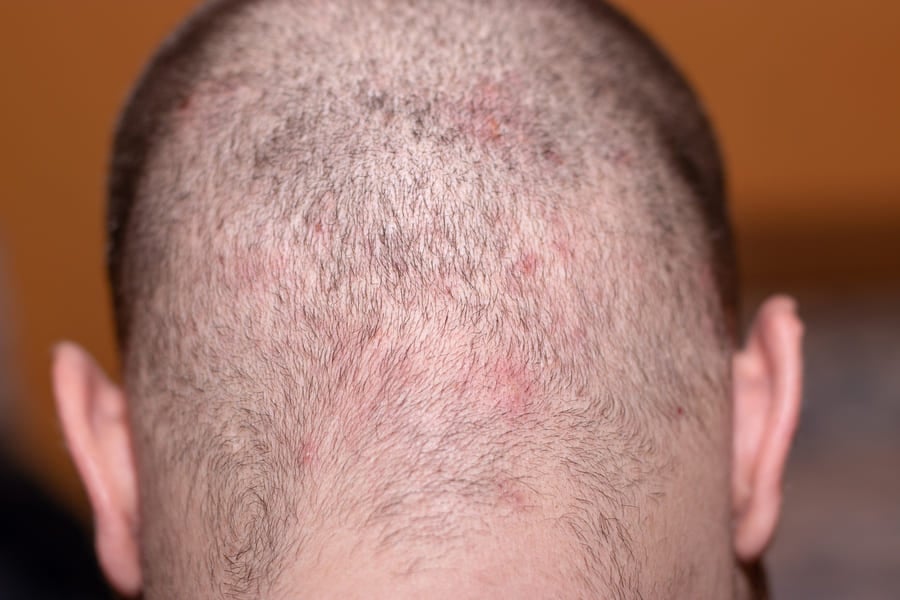
Folliculitis — inflammation of the hair follicles producing small pimple-like bumps in the recipient or donor area — is among the most common minor complications of hair transplant recovery. It typically appears several weeks to months after the procedure as new hairs begin growing and can encounter minor resistance or bacterial accumulation around the follicle opening. Most cases of mild folliculitis resolve spontaneously or with gentle management. More pronounced cases may require topical or occasionally oral antibiotics. Folliculitis is uncomfortable and temporarily alarming — the bumps can look like infection — but it is rarely serious and resolves completely in the large majority of cases.
Cyst formation at graft sites — small, enclosed cysts that develop when a hair shaft grows in the wrong direction and becomes trapped under the skin rather than emerging normally — occurs occasionally and is managed by gentle expression or minor lancing if persistent. These cysts are not dangerous but require attention if they don’t resolve on their own.
Ingrown hairs, similar to cysts in mechanism, occur when new growth fails to emerge through the surface normally and grows laterally under the skin. Management is similar to folliculitis in mild cases — keeping the scalp clean and allowing normal emergence — with more active management occasionally needed for persistent cases.
Persistent redness beyond the expected timeline — particularly in patients with fair skin or those who didn’t protect the healing scalp from UV exposure — can occasionally persist for several months beyond the typical resolution window. This is cosmetically frustrating but not clinically dangerous and typically resolves eventually, potentially responding to low-level light therapy or specific topical treatments in persistent cases.
Hiccups — unexpected and persistent hiccups following the procedure — is an unusual but documented minor complication of hair transplant surgery, believed to result from the local anesthetic affecting the phrenic nerve in some patients. Most cases resolve within hours to days without specific treatment.
Infection: The Most Important Preventable Risk
Infection is the complication that patients most commonly think of as a risk of any surgical procedure, and hair transplants are no exception. The important context is that infection following hair transplantation is uncommon when proper surgical technique and aftercare are followed — but it does occur, and the consequences of untreated infection can meaningfully compromise the result.
The infection risk in hair transplants is low for several reasons. The scalp has a rich blood supply that supports immune function and wound healing more robustly than areas with poorer vascularization. The procedure is performed under sterile conditions in clinical environments. And the small size of individual extraction and implantation wounds means the surface area vulnerable to infection is distributed rather than concentrated.
Risk factors that elevate infection probability include inadequate sterile technique during the procedure — reflecting clinic quality and standards — and poor aftercare in the recovery period. Patients who don’t follow washing protocols, who touch or scratch the healing scalp with unwashed hands, or who expose the healing wounds to high-bacterial environments in the first two weeks are more vulnerable to infection than those who follow aftercare instructions carefully.
The consequences of infection depend on how quickly it is identified and treated. Early-identified infection — caught at the first signs of increasing redness, warmth, unusual discharge, or fever — responds well to antibiotic treatment with typically minimal impact on graft survival. Untreated infection that progresses can damage follicles in the affected zone, compromise graft survival in those areas, and produce worse scarring than would have occurred with appropriate care. This is why the instruction to contact the clinic at the first signs of possible infection is not overcautious — early identification and treatment is the variable that determines whether an infection becomes a minor managed complication or a more significant outcome problem.
Systemic infection — spreading beyond the scalp — is rare in hair transplants given the local nature of the procedure and the scalp’s immune-supportive vascularity. But patients with immunocompromising conditions — uncontrolled diabetes, immunosuppressive medications, or significant immune dysfunction — have elevated infection risk that should be explicitly discussed during consultation and factored into the assessment of surgical candidacy.
Scarring: What Can Go Wrong
All hair transplant procedures involve wounding the scalp — extraction sites in the donor area and implantation channels in the recipient area — and all wounds produce some degree of scarring. The question is not whether scarring occurs but what form it takes and how visible it is.
For most patients with well-planned and well-executed FUE procedures, donor area scarring consists of small circular dots that are covered by surrounding hair at normal lengths and essentially invisible. For FUT patients, the linear scar is permanent and visible at short hair lengths, with visibility depending on scar width, which in turn depends on closure technique quality and the patient’s individual healing characteristics.
The most clinically significant scarring complication is hypertrophic scarring — raised, thickened scar tissue at extraction or implantation sites that is more visible than normal healed tissue. Hypertrophic scarring at FUE extraction sites produces dots that are raised and palpable rather than flush with the surrounding skin. At recipient implantation sites, hypertrophic scarring can produce a textured or irregular appearance in the healed scalp. Hypertrophic scarring is more common in patients with darker skin tones and can be managed with treatments including corticosteroid injections, silicone sheeting, and in some cases laser treatment — but prevention through appropriate surgical technique is more effective than treatment after the fact.
Keloid formation — raised, thickened scars that extend beyond the original wound boundaries — is a rare but serious scarring complication in patients with a genetic tendency to form keloid scars. Keloids at donor extraction sites or recipient implantation sites can produce raised, visible, and sometimes symptomatic scars that are worse in appearance than the original hair loss. Patients with a documented history of keloid formation require specific assessment before any hair transplant procedure, and established keloid tendency is considered a relative or absolute contraindication by many experienced surgeons.
Donor area visible thinning from over-harvesting is a permanent cosmetic problem that reflects a specific surgical planning failure rather than an unpredictable complication. When too high a proportion of donor follicles are extracted from a concentrated zone, the resulting extraction site density exceeds what remaining hair can cover — producing visible thinning in the donor area that is apparent even at normal hair lengths. This is prevented by conservative harvesting that respects safe density limits; it is not reversed after the fact, making it one of the most consequential quality-related risks of working with clinics that prioritize high graft counts over appropriate donor management.
Nerve Damage: What’s Temporary and What’s Rare but Permanent
The scalp contains an extensive network of sensory nerves, and any hair transplant procedure involves some degree of nerve disruption — both in the donor area from extraction and in the recipient area from channel creation and implantation. Most nerve-related effects are temporary and resolve without permanent consequence.
The temporary numbness, tingling, and altered sensation in the recipient area — described earlier as an expected experience — reflects the disruption of small cutaneous sensory nerve branches during the procedure. These nerves regenerate over weeks to months, and sensation returns to normal for the large majority of patients. This is not a complication but an expected feature of the procedure.
More significant sensory changes — patches of more complete numbness that persist beyond the typical regeneration window, or altered sensation in areas not directly in the procedure zones — can occasionally occur and represent a more meaningful nerve disruption. Most of these cases also resolve over extended time periods as nerve regeneration continues, though the timeline may be longer than the typical several-month window.
Permanent significant sensory loss is a rare but documented complication, most commonly associated with larger FUT procedures where the strip excision can potentially affect the occipital nerves. In FUE procedures, which don’t involve the same strip excision depth, significant permanent nerve damage is rare. When it does occur, it typically involves ongoing numbness in a specific scalp zone rather than pain or more severe sensory dysfunction.
Graft Survival Failure: When the Procedure Doesn’t Work as Expected
Not all potential complications of a hair transplant involve infection, scarring, or nerve damage. One of the most clinically significant risk categories is poor graft survival — when a meaningful proportion of transplanted follicles fail to establish themselves successfully in the recipient tissue and do not produce permanent hair.
Some degree of graft loss is expected in any procedure — even the best-executed hair transplants don’t achieve 100 percent graft survival. The question is what proportion survives, and what causes it when survival is lower than expected.
The primary determinants of graft survival are the quality of the surgical execution: how carefully grafts were handled during extraction, how quickly they were implanted, what preservation solution they were stored in, and how precisely they were placed at appropriate angles and depths. These are skill and process variables — in experienced hands with good protocols, graft survival rates consistently in the 85 to 95 percent range are achievable. In less experienced hands with less careful technique, survival rates can fall significantly below this, producing lower density than the procedure was planned to deliver.
Patient behavior in the first two weeks also meaningfully affects graft survival. Aggressive washing that dislodges grafts before integration, picking scabs, strenuous exercise that increases scalp bleeding risk, and tight headwear that compresses graft sites can all reduce survival rates below what the surgical execution would otherwise have achieved. This is why aftercare compliance is not optional — it is a direct determinant of how many grafts survive.
Poor graft survival from any cause produces a permanent density deficit in the affected areas — lower coverage than the procedure was designed to provide, without the ability to replace the lost follicles except through an additional procedure that draws from the same finite donor supply. This makes graft survival the risk category with the most direct and lasting impact on patient outcomes, and it makes both surgical quality and aftercare compliance the most impactful risk reduction strategies available.
Anesthesia Risks: What Local Anesthesia Actually Involves
Because hair transplants are performed under local anesthesia, the anesthesia-related risks are categorically different from — and dramatically lower than — those associated with general anesthesia procedures.
Local anesthetic agents — primarily lidocaine, often with epinephrine — are among the most widely used medications in medicine and have well-characterized safety profiles. The most significant risks associated with their use in hair transplant procedures are allergic reactions and systemic toxicity from excessive dosing.
True allergic reactions to lidocaine are uncommon — genuine IgE-mediated allergy to amide local anesthetics is rare, though reactions to preservatives in multi-dose vials are somewhat more common. Patients with documented local anesthetic allergies should inform their surgical team before the procedure; alternative agents are available for most patients with documented reactions.
Systemic toxicity from local anesthetic occurs when total dosing exceeds safe limits, allowing the anesthetic to reach therapeutic levels in the bloodstream rather than remaining localized to the injection site. In hair transplants, which involve large volumes of local anesthetic across extended scalp coverage, attention to maximum dosing limits is an important safety consideration — particularly for smaller patients where weight-based dosing limits are more constraining. Reputable clinics calculate total anesthetic doses against patient weight and stay well within established safety margins; this is one of the clinical variables that separates appropriately managed procedures from those at elevated risk of anesthetic complications.
Epinephrine, combined with local anesthetic to prolong its effect and reduce bleeding, produces temporary systemic effects when absorbed — mild tachycardia (elevated heart rate), palpitations, and anxiety — that can be alarming if unexpected but are self-limiting and not dangerous in patients without underlying cardiovascular contraindications. Patients with significant cardiac conditions should discuss epinephrine use specifically with their surgical team.
The Role of Clinic Quality in the Risk Profile
The most practically significant determinant of where any individual patient falls on the risk spectrum is the quality of the clinic and surgical team performing the procedure. This is worth stating directly, because the risk profile of a hair transplant performed by an experienced, qualified surgeon in a properly equipped and licensed clinical setting is meaningfully different from the risk profile of the same nominal procedure performed by unqualified or undertrained staff in a substandard facility.
The proliferation of medical tourism demand — particularly in Istanbul — has created a wide range of operator quality, from genuinely excellent clinics with experienced surgical teams and rigorous standards to facilities that cut corners in ways that directly elevate risk for patients. Technician-only procedures — where the surgeon’s involvement is limited to brief appearances while unlicensed technicians perform surgical steps without adequate medical supervision — represent the highest-risk category of provider, both because of the skill gap in execution and because of the reduced medical oversight that leaves patients more vulnerable to complications that appropriate supervision would identify and manage.
Risk mitigation through clinic selection is the single most impactful available lever for reducing procedural risk. Verifying Ministry of Health authorization in Turkish clinics, confirming the credentials and specific experience of the surgeon who will perform the procedure, checking ISHRS membership as an indicator of engagement with professional standards, and seeking reviews that specifically address complication management rather than only outcome aesthetics all provide information about the risk profile of a specific clinic — information that the clinic’s marketing materials are not designed to provide.
Medical Contraindications: When Hair Transplant Carries Elevated Risk
Certain medical conditions elevate the risks of hair transplant surgery sufficiently that they require specific discussion during consultation and may represent relative or absolute contraindications depending on their severity and management.
Blood clotting disorders — either excessive clotting or inadequate clotting — create specific surgical risks. Patients on anticoagulant medications have elevated bleeding risk during the procedure; managing anticoagulation around the procedure requires coordination with the prescribing physician and careful surgical planning. Patients with clotting disorders that produce inadequate coagulation may have difficulty achieving hemostasis at extraction and implantation sites.
Uncontrolled diabetes impairs wound healing and elevates infection risk through mechanisms that directly affect hair transplant outcomes. Well-controlled diabetes is a different clinical picture from uncontrolled diabetes — patients with well-managed blood glucose can often be appropriate candidates, while those with poor glycemic control have significantly elevated complication risk.
Active autoimmune hair loss conditions — including active alopecia areata — represent a specific contraindication to transplantation, because the autoimmune process that is causing loss would also attack transplanted follicles. Transplantation in active alopecia areata produces predictably poor results; the appropriate approach is disease management before considering surgical intervention.
Active scalp conditions — psoriasis, seborrheic dermatitis, or folliculitis in the procedure zones — require management before transplantation, as active skin disease in the recipient or donor areas elevates both infection risk and graft survival failure risk.
History of keloid formation, as discussed, is a specific contraindication that requires explicit assessment rather than assumption that it won’t be a problem.
Certain medications — beyond anticoagulants, including some immunosuppressants and certain antidepressants — can affect the hair growth cycle, wound healing, or bleeding risk in ways that require discussion during consultation. A complete medication history is an essential part of the pre-procedure assessment.
How to Minimize Your Personal Risk
The risk factors that most significantly determine individual patient outcomes are, to a meaningful degree, within the patient’s control — through the choice of clinic and through behavior before and after the procedure.
Choosing a clinic with verifiable credentials, genuine surgeon involvement, appropriate facility standards, and a track record that can be assessed through long-term patient reviews rather than curated before-and-after galleries is the most impactful single risk reduction decision available. The difference in complication rates between appropriately executed procedures and those performed with inadequate surgical standards or supervision is not marginal — it is substantial and clinically meaningful.
Providing a complete and accurate medical history during consultation — including all medications, relevant medical conditions, and any history of abnormal scarring — gives the surgical team the information needed to assess individual risk factors and plan appropriately. Concealing relevant history to “qualify” for the procedure creates risk that the surgical planning could have mitigated had the information been available.
Following aftercare instructions throughout the recovery period — washing correctly, avoiding the behaviors that risk graft dislodgement, protecting the healing scalp from UV exposure, staying within the physical activity restrictions, and contacting the clinic promptly when something seems wrong — directly affects graft survival rates and complication outcomes in ways that are under the patient’s control.
At Hairpol, the pre-procedure consultation explicitly covers individual risk factors, medical contraindications, and the specific safety measures that characterize a well-executed procedure — because patients who understand their specific risk profile make better decisions than those who receive only generic safety reassurance. Hair transplantation is genuinely safe for appropriate candidates in appropriate clinical settings. Getting both of those conditions right is what makes that safety statement accurate for any individual patient.
The Honest Summary
A hair transplant performed by qualified surgeons in appropriately licensed facilities, in patients without significant contraindications, is a safe elective procedure with a well-established risk profile. The large majority of patients experience expected, manageable outcomes without serious complications. Minor complications — folliculitis, temporary altered sensation, slower-than-expected healing — are manageable and transient. Serious complications — significant infection, meaningful permanent nerve damage, keloid formation — are uncommon and largely preventable.
The real risk in hair transplantation is not inherent to the procedure itself but is significantly amplified by inadequate surgical execution, substandard facility conditions, and poor aftercare. These are modifiable risk factors — mitigated through careful clinic selection, complete medical disclosure, and diligent aftercare compliance — rather than fixed biological probabilities that apply equally regardless of how the procedure is performed.
Understanding the genuine risk profile — specific, honest, and proportionate — is what allows patients to make informed decisions that appropriately weigh the real risks against the real benefits of a procedure that, for appropriate candidates in appropriate settings, consistently delivers meaningful and lasting improvement.
Find this helpful? Add Hairpol as a preferred source on Google.
Get a Free Consultation
Answer a few questions and the medical team will review your situation.
