
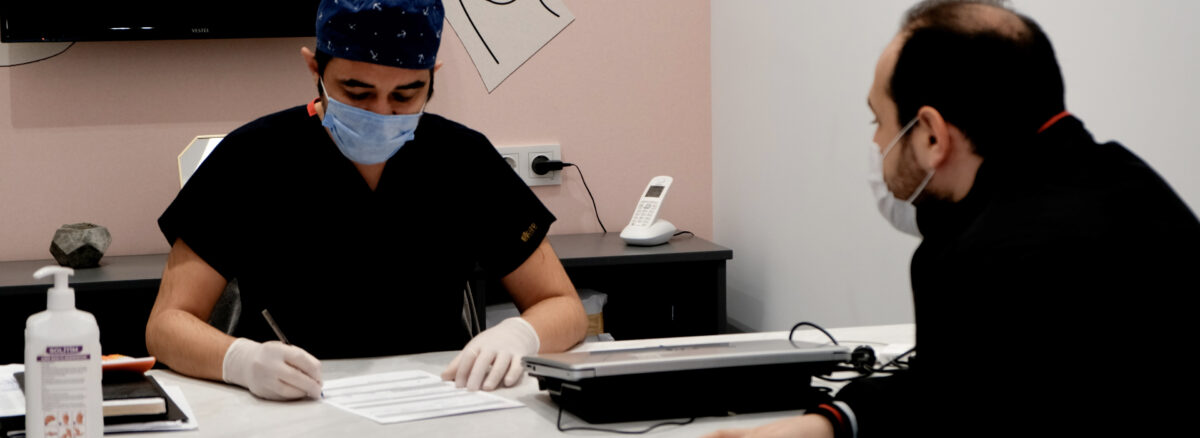
The information environment around hair transplant clinics is one of the most difficult to navigate in all of medical tourism. There are thousands of clinics operating across dozens of countries, marketing budgets that dwarf clinical budgets at many facilities, before-and-after galleries that are carefully curated rather than representative, and a patient base that is emotionally vulnerable in ways that make clear-eyed evaluation genuinely difficult.
People researching hair transplants are usually doing so because they’re distressed about hair loss. That distress creates urgency. Urgency creates receptiveness to reassurance. And clinics that are very good at providing reassurance — through polished websites, enthusiastic coordinators, and compelling social media content — are not necessarily the clinics that produce the best results.
The gap between a clinic’s marketing quality and its clinical quality can be enormous, and navigating that gap requires a specific set of evaluation tools that most patients don’t have when they start researching. This guide provides those tools, directly and without softening the more uncomfortable realities of how the hair transplant market actually operates.
Why the Market Is Difficult to Navigate
Understanding why clinic selection is so challenging requires understanding the structure of the industry itself.
Hair transplant procedures generate significant revenue. A single procedure costs anywhere from a few thousand to tens of thousands of dollars depending on location, clinic, and graft count. Volume is high — demand for the procedure has grown consistently for years. This economic reality attracts a wide range of operators, from genuinely excellent surgical facilities with experienced teams to clinics that have optimized their marketing and patient acquisition far beyond their clinical capabilities.
The procedure itself creates an evaluation problem. Results take six to twelve months to fully develop, which means that by the time a patient has a clear picture of their outcome, they’re well past the point where any feedback they give influences their pre-procedure decision-making. The review ecosystem for hair transplant clinics is populated heavily by early post-procedure reviews — patients rating their experience in the first weeks or months, before the actual result is visible. These reviews capture hospitality, communication, and the logistics of the procedure experience, not the clinical outcome that determines whether the patient is ultimately satisfied.
Social media has added another layer of complexity. Clinics with strong Instagram and TikTok presences publish before-and-after content that is inherently selective — the best results, the most photogenic transformations, the cases that photograph well under controlled studio lighting. Patients who research primarily through social media are evaluating a curated highlight reel rather than a representative sample.
Medical tourism adds geography to the complexity. When a patient travels internationally for a procedure — as a significant proportion of hair transplant patients now do — the ability to verify clinical credentials, speak directly with past patients, or seek recourse if something goes wrong is substantially reduced compared to choosing a local facility.
The Surgeon Question: The Most Important Thing Nobody Asks
The single most important clinical variable in any hair transplant procedure is the surgeon — their experience, their aesthetic judgment, their involvement in the actual procedure, and their track record with cases similar to yours. This is the question that receives the least attention in most patient research, and clinics that want to avoid scrutiny on this point have become skilled at deflecting it.
The deflection usually happens through technique language. When a patient asks about surgical quality, they’re often redirected to a discussion of the technique being used — whether the clinic performs Sapphire FUE or DHI, what instruments are used, what preservation solution grafts are stored in. These are legitimate clinical details, but they function as a distraction from the more important question of who is performing the procedure and how experienced they are.
In many clinics, particularly high-volume facilities that process multiple patients per day, the surgeon’s direct involvement in the procedure is limited. The surgeon may design the hairline and perform the initial incisions or channel creation, and then hand the procedure to a team of technicians who complete the extraction and implantation. This is not inherently wrong — technician involvement is a normal part of hair transplant procedures globally — but the degree of surgeon oversight and involvement varies enormously between clinics, and patients are rarely told this explicitly.
A surgeon who designs the hairline carefully and then supervises closely throughout the procedure produces very different results from one who appears at the beginning and end while technicians perform the majority of the work without meaningful oversight. The instruments and technique are the same. The outcome can be entirely different.
Direct questions worth asking every clinic include: Who specifically performs my hairline design? Who creates the recipient channels? Who performs the extraction? Who performs the implantation? At which stages of the procedure is the surgeon directly present and actively working? How many procedures does the lead surgeon perform per day?
Clinics where the surgeon is genuinely present and involved throughout will answer these questions specifically and confidently. Clinics that deflect these questions back toward technique discussions or give vague answers about their team’s collective experience are telling you something important about their model.
Credentials: What to Verify and How
Credential verification in the hair transplant industry is harder than it sounds, because the field sits at the intersection of surgery and cosmetics in a way that means credential requirements vary significantly across different countries and regulatory frameworks.
International societies provide one reference point. The International Society of Hair Restoration Surgery maintains membership standards and provides a directory of members that can be used to verify whether a clinic’s surgical team has engaged with the professional standards of the field. Membership is not a guarantee of quality — it requires meeting certain criteria rather than demonstrating a specific outcomes standard — but it indicates engagement with professional accountability that is worth verifying.
Health tourism authorization is relevant for clinics in Turkey and some other medical tourism destinations. In Turkey, the Ministry of Health issues health tourism authorization certificates to clinics that meet specific facility and staffing standards. This certification is a minimum quality threshold rather than a distinction indicator, but its absence at a Turkish clinic is a meaningful red flag. Hairpol holds both Ministry of Health authorization and international certification, which represents a verifiable baseline of regulatory compliance.
Beyond formal credentials, the verification of what a clinic claims about its team’s experience is worth pursuing directly. If a clinic states that their lead surgeon has performed over 5,000 procedures, that claim should be at least plausible based on how long the clinic has operated and the volume they appear to handle.
Before-and-After Galleries: How to Read Them Honestly
Every clinic has a before-and-after gallery. The galleries are universally impressive. The transformations are dramatic, the after photos are flattering, and the overall impression is of consistent, excellent results across a wide range of cases.
The selection problem is fundamental. Clinics publish their best results. Even a clinic with a 60 percent satisfaction rate could assemble a gallery of fifty genuinely impressive results from a patient base of thousands. The gallery doesn’t tell you the distribution of outcomes — whether the impressive results represent the typical experience or the exceptional one.
The photography problem compounds this. Before photos are often taken under unflattering conditions — harsh overhead lighting, hair wet or slicked back, close-up angles that maximize the appearance of thinning. After photos are taken under favorable conditions — good lighting from the side or front, hair styled for maximum coverage, angles chosen to showcase density. This asymmetric photography inflates the apparent transformation even for results that are genuinely good.
The timeline problem is also significant. After photos are typically taken at twelve months or later, when the result is at its best. Results that looked good at six months may look different at three years if surrounding native hair has continued to thin.
What should you look for in a gallery that gives more genuine information? Cases with similar characteristics to your own — similar hair type, similar degree and pattern of loss, similar age range. Results photographed under consistent lighting between before and after rather than the unflattering-to-flattering progression that exaggerates transformation. Cases where the after photo is taken at various angles rather than only the most favorable one. Evidence of cases where the hairline is visible at close range and in profile, not only from the front at a distance.
Reviews and Testimonials: The Filter Every Patient Needs
Online reviews are the primary research tool most patients use when evaluating clinics, and they are among the least reliable indicators of clinical quality available. This is not because reviews are useless — they contain real information — but because the review ecosystem around hair transplant clinics is systematically biased in ways that most patients don’t account for.
The timing problem is the most significant. The majority of hair transplant reviews are written in the first days, weeks, or months after the procedure — before the result exists. These reviews capture the consultation experience, the logistics, the clinic’s hospitality, the post-procedure care communication, and the patient’s hope and optimism. They do not capture whether the hair actually grew well, whether the hairline looks natural, or whether the patient is satisfied at twelve or eighteen months.
A clinic with hundreds of enthusiastic early reviews and mediocre clinical outcomes is entirely plausible, because the review cycle is decoupled from the outcome cycle. Clinics with excellent patient management will generate positive early reviews regardless of their clinical quality, because the early experience and the clinical outcome are separate things being evaluated by the same patients at different times.
What gives more reliable signal in reviews is the subset that have been written at twelve months or later by patients who are specifically commenting on the grown result. These reviews are a minority of the total but carry significantly more weight than the post-procedure enthusiasm reviews that dominate most clinic profiles.
Patient forum communities — particularly long-running forums dedicated specifically to hair restoration — contain detailed first-person accounts that are often more useful than aggregated review platforms. Patients in these communities are typically motivated to share complete experiences including results, and the community’s collective knowledge provides a reference point for evaluating specific clinics that isn’t available through standard review platforms.
Consultation Quality: What It Reveals About the Clinic
The consultation is the most direct window into how a clinic approaches your specific case, and most patients underuse it as an evaluation tool. The value of a consultation is not only in the information it provides about the proposed treatment — it’s in what the clinic’s behavior during the consultation reveals about their priorities and clinical standards.
A consultation that begins with a graft count and a price before a thorough assessment of your hair loss pattern, donor area, and long-term trajectory is telling you something about what the clinic optimizes for. Graft count and price are the closing metrics of a sales process. A clinically rigorous consultation builds toward them from a thorough assessment of the patient’s situation, not the other way around.
Specific elements of consultation quality worth paying attention to include how the clinic approaches hairline design. Is there a genuine conversation about position, aging, and your specific facial structure? Or is a line drawn approximately where you point and confirmed as appropriate without meaningful clinical discussion?
How the clinic handles the topic of your expectations matters significantly. A consultation that validates every expectation you bring and confirms that your desired outcome is achievable without qualification is more likely to be telling you what you want to hear than what you need to hear. Legitimate clinical consultations involve honest conversation about what is realistic, what isn’t, and why — including discussions of factors that might reduce the achievable result, such as limited donor supply, ongoing loss progression, or hair characteristics that make certain outcomes harder to achieve.
Whether the clinic raises medical management — finasteride, minoxidil, or other options — as part of the discussion is a useful indicator. Clinics focused on surgical volume have limited commercial incentive to recommend conservative non-surgical approaches or to suggest delaying surgery until hair loss has stabilized. Clinics that raise these options genuinely are demonstrating a patient-centered approach that extends beyond the immediate procedure.
The response to questions about the surgeon’s involvement in the procedure is perhaps the most revealing single element of any consultation. Vague, evasive, or deflecting answers to direct questions about who performs which elements of the procedure indicate that the clinic is aware this is an area where scrutiny is unwelcome. Confident, specific answers indicate a team with nothing to hide about how they operate.
Red Flags That Should Stop a Decision
There are specific behaviors and practices in the hair transplant industry that are clear enough indicators of problematic operations to warrant stopping the evaluation of that clinic entirely.
Pressure to decide quickly — through limited-time pricing offers, claims about slot availability, or urgency created around booking before a price increase — is a sales tactic applied to a medical decision. Legitimate medical procedures don’t require same-day commitments driven by artificial urgency.
Guaranteed results stated categorically and without qualification are not clinically honest. Hair transplant outcomes depend on biological factors that cannot be fully controlled — graft survival, individual healing response, ongoing native hair loss, and hair characteristics that interact in ways that cannot be perfectly predicted before the procedure.
Significantly below-market pricing deserves careful scrutiny rather than enthusiasm. Cost reductions in hair transplant procedures come from somewhere — reduced surgical time, lower-quality materials, technician-only procedures with minimal surgical oversight, or high patient volume that compromises individual case attention.
Before-and-after photos that are not clearly of patients treated at that clinic, results that look inconsistently photographed suggesting aggregation from multiple sources, or galleries that contain results that don’t match the demographic of the clinic’s stated patient base are all indicators that the gallery may not represent what it claims to.
Clinics that cannot provide verifiable information about their surgical team’s credentials, that describe their surgeon in vague terms without specific qualification or experience information, or that redirect credential questions toward technique or equipment discussions should be approached with significant caution.
The Multiple Consultation Imperative
One of the most consistent patterns among patients who are satisfied with their hair transplant outcomes is that they consulted with multiple clinics before making a decision. One of the most consistent patterns among those who are not satisfied is that they consulted with one clinic, liked the experience, and proceeded.
Comparing clinical recommendations across consultations reveals where consensus exists and where it doesn’t. If three clinics recommend a similar approach, hairline position, and graft count for your case, there’s reasonable confidence that the approach is appropriate. If one clinic recommends a dramatically different plan from the others — either significantly more aggressive or significantly more conservative — understanding why requires asking direct questions that the outlier recommendation generates.
The range of consultation quality across different clinics becomes apparent only through comparison. A patient who consults with only one clinic and receives a mediocre consultation has no reference point that reveals it as mediocre. A patient who consults with four clinics and receives one consultation that is dramatically more thorough, more specific, and more honest than the others has identified a signal worth acting on.
The practical approach is to narrow a longlist of clinics through initial research, then conduct genuine consultations — ideally in person, though video consultations are increasingly useful for initial evaluation — with three to five clinics before making a final decision.
What the Right Decision Actually Feels Like
There’s a version of choosing a hair transplant clinic that is driven by enthusiasm, by the warmth of a clinic’s communication style, by the impressiveness of a gallery, or by the reassurance of a coordinator who makes everything sound straightforward. This version of the decision feels exciting.
There’s another version where the decision is driven by having verified credentials, asked difficult questions and received specific answers, compared multiple consultations honestly, understood the realistic range of outcomes for your case, and chosen a clinic because the evidence supports it rather than because the marketing convinced you.
The second version tends to produce better outcomes — not only because the evaluation process selects for genuinely capable clinics, but because a patient who has made an evidence-based decision enters recovery with calibrated expectations and the psychological stability that comes from genuine confidence in their choice.
The hair transplant you’re considering will be performed once, will affect how you look and feel for years, and cannot be easily undone if the result is disappointing. The clinic that performs it deserves evaluation that matches that significance — thorough, skeptical, comparative, and driven by clinical evidence rather than marketing quality.
The right clinic will hold up under that scrutiny. The ones that don’t are telling you something important.
