
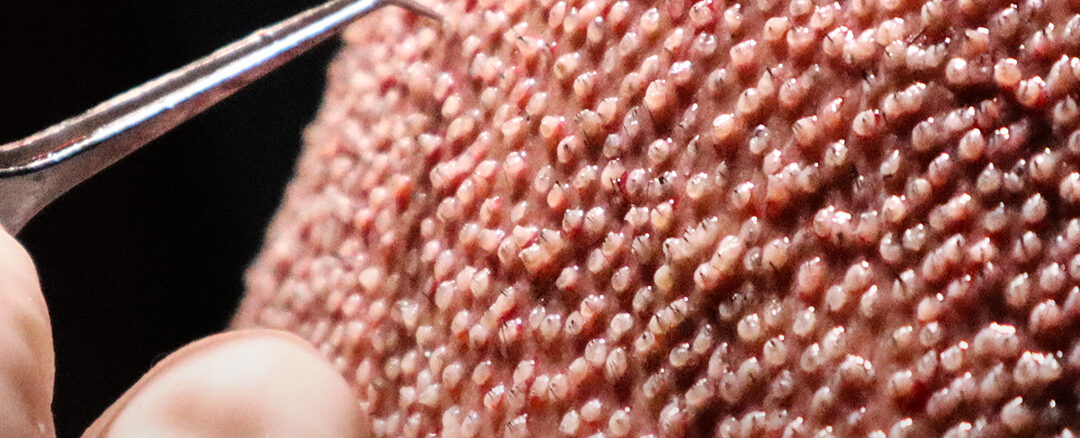
The graft count question comes up in almost every hair transplant consultation, and it almost always goes the same way. The patient asks how many grafts they need. The clinic gives a number. The patient compares that number to numbers from other clinics, looks up what different graft counts cost, and tries to figure out whether they’re being oversold or undersold — without really having the framework to evaluate either.
Graft count has become the primary unit of comparison in the hair transplant market, which is a problem. It’s a number that’s easy to communicate, easy to compare across clinics, and almost entirely insufficient as a standalone measure of whether a procedure will produce a natural result.
The honest answer to how many grafts you need is: it depends on factors that a number alone cannot capture. But that answer isn’t satisfying without understanding what those factors actually are, how they interact, and what questions you should be asking instead of — or alongside — the graft count.
Why Graft Count Became the Default Metric
Before getting into what graft count does and doesn’t tell you, it’s worth understanding why it became the dominant way patients and clinics talk about procedures.
Grafts are countable. They can be presented as a deliverable — you pay for X grafts, you receive X grafts. This makes them function like a product specification in a way that softer qualities like surgical judgment, hairline design, and long-term planning don’t. You can compare 2,500 grafts at one clinic to 2,500 grafts at another clinic on a spreadsheet. You cannot easily compare the aesthetic sensibility of two surgeons on a spreadsheet.
The growth of medical tourism in the hair transplant industry accelerated this dynamic. When patients are evaluating clinics across different countries from behind a laptop, graft count and price per graft become the most accessible comparison points. Clinics learned to compete on these terms, and the conversation shifted accordingly.
The result is a market where patients are very focused on a metric that tells them far less than they think it does, and not focused enough on the factors that actually determine whether they’ll be happy with their result in five and ten years.
What a Graft Actually Is
The term graft is often used loosely, and the imprecision matters when comparing numbers across clinics.
A graft — more precisely, a follicular unit — is a naturally occurring grouping of hair follicles as they exist in the scalp. Follicular units contain between one and four individual hairs, with most people having a mix of single-hair, two-hair, and three-hair groupings across their scalp.
When a clinic quotes a graft count, they should be referring to follicular units — the natural groupings — not individual hairs. But not all clinics are consistent about this. Some quote hair counts rather than graft counts, which produces a significantly higher number that sounds more impressive but describes the same amount of transplanted material.
2,500 grafts and 2,500 hairs are not the same thing. If the average follicular unit contains 2.2 hairs — a typical figure — then 2,500 grafts represents approximately 5,500 individual hairs. A clinic quoting 2,500 hairs is describing roughly 1,100 grafts. The difference in coverage and density between these two figures is enormous.
This is not always intentional deception. Terminology varies across clinics, countries, and medical traditions. But it means that comparing graft counts across different clinics without confirming what the number actually refers to is comparing different things and assuming they’re the same.
When evaluating any hair transplant quote, confirm that the number being discussed refers to follicular units, not individual hairs, and ask what the estimated average hair-per-graft ratio is for your specific donor characteristics.
The Variables That Actually Determine Coverage
Graft count influences coverage, but it doesn’t determine it. Several other variables interact with graft count to produce the actual visual result — and understanding them explains why two patients with the same graft count can have dramatically different outcomes.
Recipient area size is the most fundamental variable. The same number of grafts distributed across a large area produces lower density than the same number distributed across a smaller area. A patient needing to cover the entire top of the scalp — frontal zone, mid-scalp, and crown — is working with a much larger recipient canvas than a patient addressing only a receding hairline. The graft count needed to achieve any given density level scales with the size of the area being covered.
Native hair density refers to how many hairs per square centimeter exist in the recipient area before any transplantation. A patient with significant existing native hair throughout the recipient zone needs fewer grafts to achieve a natural appearance than a patient with complete baldness across the same area — because the transplanted grafts supplement what’s already there rather than building coverage from zero.
Hair caliber describes the thickness of the individual hair shaft. Patients with coarser, thicker hair achieve more visual coverage per graft than patients with fine hair, because each strand blocks more light and creates more shadow. A patient with thick, dark hair transplanting into a pale scalp might achieve what looks like dense coverage with 2,000 grafts. A patient with fine, light-colored hair over a similar scalp tone might need considerably more to achieve equivalent visible density.
Hair color contrast between the hair and scalp significantly affects perceived density. Dark hair against a pale scalp creates high contrast — the scalp is more visible between strands, making any gap in coverage apparent. Light hair against a pale scalp creates lower contrast — coverage can look more complete with lower actual density because the scalp blends visually with the hair.
Curl and wave in the hair shaft affects coverage in a way that is often underestimated. Curly and wavy hair fans out as it grows, creating more lateral coverage per strand than straight hair. A patient with naturally curly hair achieves more coverage per graft than a patient with straight hair implanted at the same density. This is one reason why hair transplants in patients with Afro-textured or wavy hair often produce impressively full results at graft counts that might look sparse in straight-haired patients.
Density Numbers and What They Mean in Practice
When surgeons and clinics discuss density, they typically work in grafts per square centimeter. This gives a more meaningful picture of coverage than a total graft count because it relates to the size of the area being treated.
Native scalp density in a person without hair loss is typically between 80 and 100 follicular units per square centimeter. Achieving this density through transplantation is not the goal — and in most cases is not possible, because the donor area simply doesn’t have enough follicles to recreate native density across an entire balding scalp.
The density that creates a natural appearance in a transplanted area is typically in the range of 40 to 60 follicular units per square centimeter. This is lower than native density, but hair does not need to match native density to look natural. It needs to create sufficient coverage that the scalp is not visibly apparent under normal conditions and normal lighting.
This is an important distinction. Natural-looking does not mean the same as naturally dense. It means appropriately distributed, correctly angled, and sufficient to produce the optical effect of coverage — which is achieved at densities well below the native baseline.
The exact density target for any patient depends on all the variables discussed above. A patient with coarse, wavy hair may look completely natural at 35 grafts per square centimeter. A patient with fine, straight hair and high contrast might need 55 grafts per square centimeter to achieve a similar visual result.
The Recipient Area Calculation
A common way to estimate graft requirements is to calculate the size of the recipient area and multiply by the target density. This is useful as a starting framework but requires honest assessment of the area size to be meaningful.
The frontal zone — from the hairline to approximately the midpoint of the scalp — typically covers 60 to 80 square centimeters in a patient with moderate to advanced loss. At a density of 45 grafts per square centimeter, this zone alone requires approximately 2,700 to 3,600 grafts.
The mid-scalp and crown add further area. A patient with loss across the entire top of the scalp — Norwood Type 5 or 6 — may be working with a total recipient area of 150 to 200 square centimeters or more. Covering this fully in a single session at adequate density may require more grafts than a typical donor area can safely provide in one harvest.
This is why the graft count conversation cannot be separated from the donor area conversation. The question is not only how many grafts are needed for the recipient area — it’s how many grafts the donor area can provide without being over-harvested, and how to allocate them across the recipient area in a way that produces the most natural and sustainable long-term result.
The Donor Area: The Other Side of the Equation
Every graft used in a hair transplant comes from the donor area — primarily the back and sides of the scalp, where follicles are resistant to the hormonal processes that cause androgenetic hair loss. This area is finite, and its capacity sets an absolute ceiling on what can be achieved through transplantation.
Donor area yield varies significantly between individuals. A patient with high native donor density, a large donor zone, and thick hair caliber might have a lifetime donor capacity of 7,000 to 9,000 grafts. A patient with lower donor density or finer hair might have a realistic lifetime capacity of 4,000 to 5,000 grafts.
Over-harvesting the donor area — extracting too high a percentage of available follicles from a given zone — reduces density in the donor area visibly and compromises the appearance of the back of the head. It also depletes the supply available for future procedures, which matters significantly for patients whose hair loss is still progressing.
A responsible hair transplant plan accounts for lifetime donor supply, not just the grafts needed for the current procedure. This is especially important for younger patients and for those with progressive hair loss patterns. Using 80 percent of a patient’s lifetime donor capacity in a single session addresses today’s hair loss at the cost of having almost nothing left if loss continues over the next decade.
Conservative donor harvesting — using what’s needed now while preserving supply for the future — is a mark of genuinely patient-centered surgical planning, even when it means a patient gets fewer grafts in the current session than they wanted.
Why More Grafts Isn’t Always Better
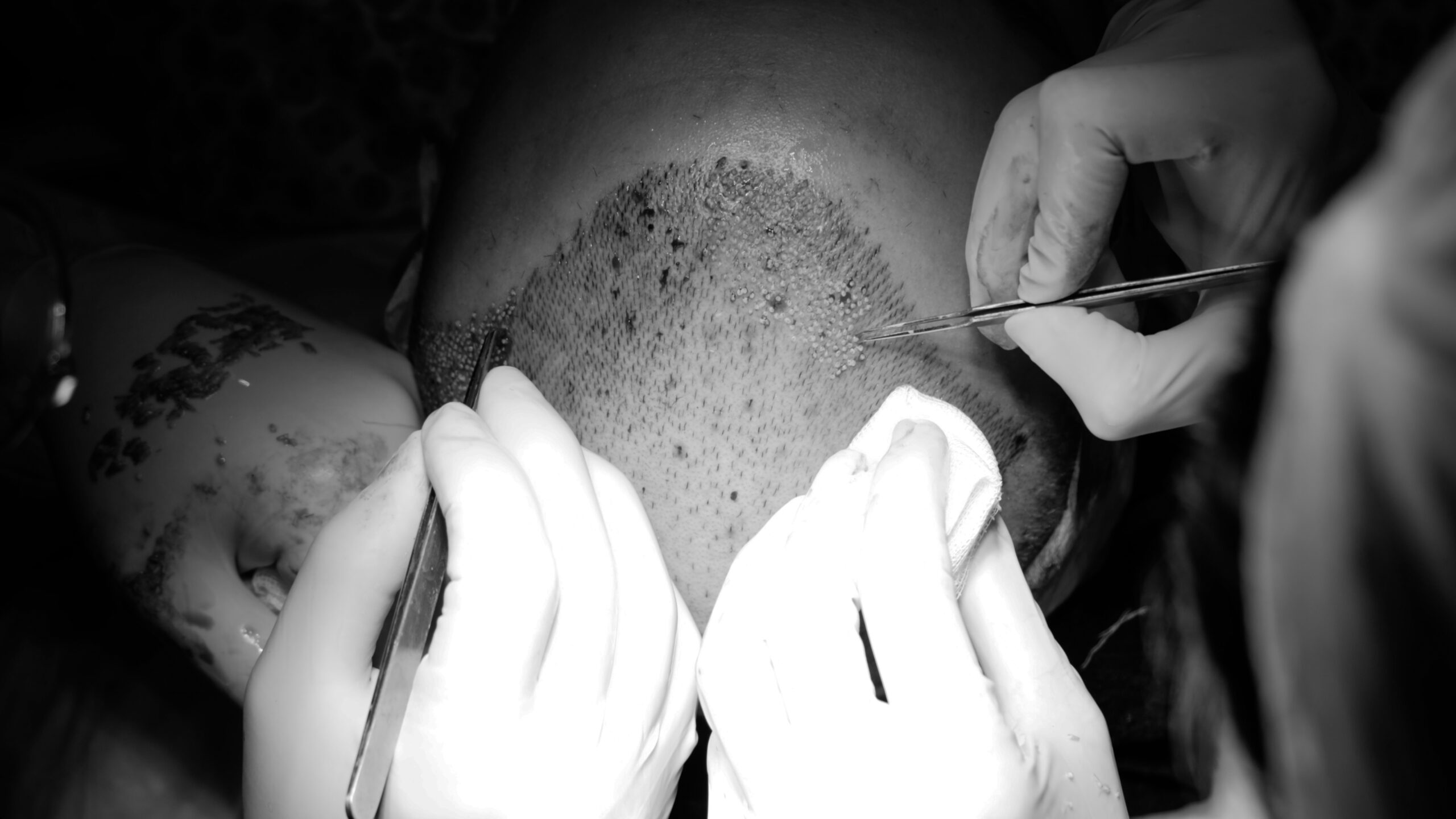
The natural patient instinct is to want more grafts. More grafts means more coverage, higher density, better result — or so the logic goes. This intuition is understandable but doesn’t always hold.
Transplanting too many grafts into an area that isn’t adequately vascularized to support high-density implantation can compromise graft survival. When grafts are placed too close together in a single session, the blood supply available in the recipient zone may be insufficient to nourish all of them through the initial healing phase, resulting in lower overall survival rates than a more conservative density would have achieved.
Experienced surgeons know the density limits their technique and the patient’s scalp can support in a single session. Pushing beyond those limits in pursuit of a higher total graft count doesn’t improve the result — it risks degrading it.
There is also the aesthetic dimension. Density that is too high in the wrong places can actually look less natural than appropriately distributed lower density. A hairline with extremely high graft density immediately behind it but sparse coverage further back creates an unnatural gradient. Natural hair doesn’t have maximum density at the hairline and then drop off — it transitions gradually, and good hair transplant design replicates that gradient even when working with limited graft supply.
The Hairline Graft Calculation
The hairline deserves its own consideration because it’s where the visual impact of graft distribution is most apparent and where design decisions have the greatest effect on whether the final result looks natural or obviously transplanted.
Natural hairlines are not solid walls of hair. They have a gradual transition zone — an area of lower density where single-hair follicular units create a soft leading edge before density increases behind it. Replicating this transition is one of the most important technical and aesthetic challenges in hair transplant surgery.
Single-hair grafts are used at the very leading edge of the hairline to create this soft transition. Two-hair and three-hair grafts are placed progressively further back to build density. The ratio and distribution of single to multi-hair grafts across this transition zone significantly affects how natural the hairline looks at close range.
A hairline that is dense with two and three-hair grafts right at the leading edge looks pluggy and artificial — not because the grafts are bad, but because the distribution doesn’t replicate how natural hairlines actually work. The graft count used in hairline construction matters less than how those grafts are allocated across the transition zone.
This is a design and execution question, not a quantity question. Two surgeons using the same number of hairline grafts can produce dramatically different-looking results based purely on how they distribute and angle those grafts across the transition.
What a Graft Count Quote Should Include
When a clinic quotes a graft count for a procedure, the number alone is not sufficient information to evaluate the proposal. A complete picture includes several additional elements.
The quote should specify whether the count refers to follicular units or individual hairs, and provide an estimated hair-per-graft ratio based on your specific donor characteristics. It should identify the recipient areas being addressed and their approximate size in square centimeters. It should describe the target density per square centimeter for each zone and the reasoning behind that target given your hair characteristics. It should address how this session fits into your likely lifetime hair loss trajectory and what graft supply is being preserved for potential future needs.
A clinic that provides all of this context alongside a graft count is planning your procedure. A clinic that provides only a number is quoting you a product.
The difference matters enormously for whether the result you get in twelve months is the one you actually wanted — and whether it continues to look natural in ten years rather than just in the first before-and-after photograph.
The Natural Result Question Reframed
The original question — how many grafts do you actually need for a natural result — is better answered as a range than a number, and better understood as a design question than a quantity question.
For a patient addressing hairline recession at Norwood Type 2 to 3, a well-planned procedure using 1,500 to 2,500 grafts can produce a genuinely natural result when those grafts are thoughtfully distributed across the transition zone and frontal area.
For a patient with more advanced loss at Norwood Type 4 to 5 addressing the frontal zone and mid-scalp, 2,500 to 3,500 grafts is a more typical range for meaningful coverage, with the understanding that density will be lower than native but sufficient to look natural under normal conditions.
For comprehensive coverage of advanced loss including the crown, the graft requirements often exceed 4,000 and may push toward the limits of what a single session and a single donor harvest can reasonably provide.
But in every case, the number matters less than the plan behind it — the hairline design, the density distribution, the allocation across zones, the conservation of donor supply, and the surgeon’s honest assessment of what the grafts available can realistically achieve.
A natural hair transplant result is not produced by a number. It’s produced by the judgment applied to using that number well.
