
Every hair transplant consultation eventually arrives at the same moment. The surgeon or patient coordinator explains that there are different techniques available, mentions FUE and DHI, and the patient nods while quietly having no idea what the practical difference actually means for their specific situation.
The marketing around both techniques hasn’t helped. FUE is described as revolutionary by some clinics and outdated by others. DHI is presented as the premium option in certain markets and as unnecessarily complicated in others. Before-and-after results from both look identical in most promotional material, which makes the choice feel arbitrary — or worse, like a pricing decision disguised as a clinical one.
It isn’t arbitrary. FUE and DHI are genuinely different in how they work, what they’re best suited for, and what the experience of recovery looks like. Understanding the actual difference — not the marketing version — gives you a much more useful framework for evaluating what’s right for your specific hair loss situation.
What Both Techniques Share
Before getting into the differences, it’s worth establishing the common ground, because the two techniques are more similar than the way they’re marketed suggests.
Both FUE and DHI are follicular unit extraction methods. Both extract individual follicular units from the donor area — typically the back and sides of the scalp — using a punch instrument that isolates each graft without the linear incision associated with the older FUT strip method. Neither leaves a linear scar. Both allow the patient to wear their hair short after recovery without a visible harvest scar. Both, when performed well by experienced hands, produce natural-looking permanent results.
The extraction phase of both procedures is essentially the same. The difference between the two techniques is entirely in what happens after extraction — how the grafts are implanted into the recipient area.
How FUE Implantation Works
In a standard FUE hair transplant, the implantation process involves two distinct steps that happen sequentially.
First, the surgeon creates recipient sites — small incisions or channels in the scalp where each graft will be placed. These channels are made with a blade or, in the case of Sapphire FUE, with a sapphire-tipped instrument that creates particularly precise, smooth-edged incisions. The depth, angle, and direction of each channel is determined at this stage, which is where the artistry of hairline design and natural flow is expressed.
Second, once the channels have been created across the recipient area, the extracted grafts are placed into those channels using forceps. This placement step is typically performed by experienced technicians working alongside the surgeon.
The separation of these two steps — channel creation and graft placement — allows the surgeon to plan and execute the entire recipient zone design before any graft is placed. The pattern can be reviewed and adjusted before implantation begins. It also means that the grafts spend some time outside the body between extraction and placement, stored in a preservation solution that maintains their viability during the waiting period.
How DHI Implantation Works
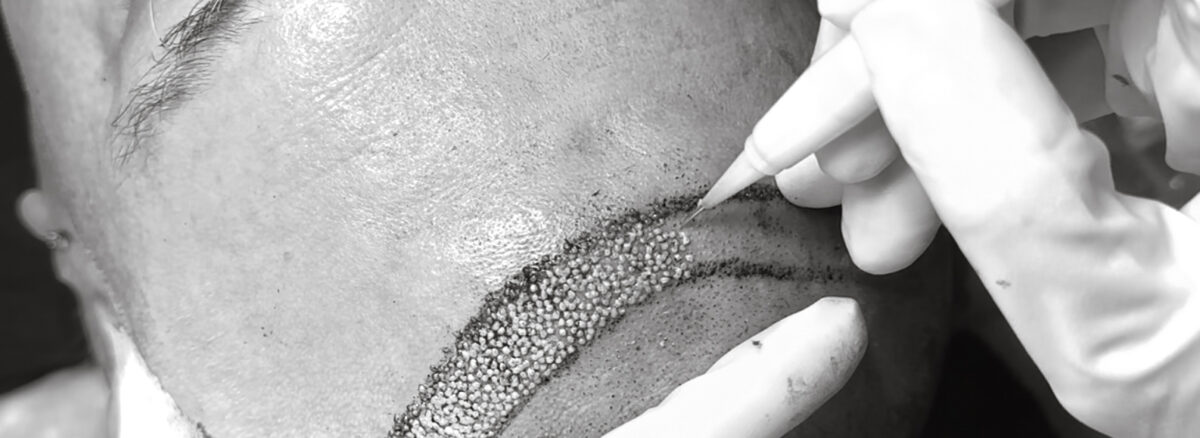
DHI — Direct Hair Implantation — collapses the two-step implantation process into one using a specialized pen-like device called a Choi implanter.
The Choi pen has a hollow needle at its tip. A graft is loaded into the needle by a technician, and the pen is then used to simultaneously create the channel and deposit the graft in a single motion. There is no separate channel-creation phase. The graft goes directly from the preservation solution into the scalp in one step.
This has a meaningful implication for graft handling time. In DHI, each graft moves from extraction to implantation more directly, with less time spent outside the body. For some graft types — particularly finer, more delicate follicles — this reduced out-of-body time can be a meaningful advantage.
The Choi pen also allows implantation without shaving the recipient area in some cases, because no pre-made channels require pre-visualization of the scalp. For patients who want to keep existing hair in the recipient zone intact during the procedure — often those with mild to moderate thinning rather than complete baldness — this can be a significant practical benefit.
The Shaving Question
This is often where the conversation between patients and clinics gets most concrete, because shaving is something patients have a strong practical preference about.
Standard FUE typically requires shaving both the donor area and the recipient area. The donor shave is necessary to allow precise extraction of follicular units. The recipient shave makes channel creation more accurate and allows the surgeon to visualize the scalp clearly when designing placement.
DHI allows the recipient area to remain unshaved in many cases. Because the Choi pen implants directly without pre-created channels, the existing hair in the recipient zone can remain in place during the procedure. The donor area still typically requires shaving for extraction.
For patients with significant existing hair who are concerned about a sudden visible change in appearance during recovery — particularly those in the early stages of thinning who haven’t disclosed their procedure to colleagues or social circles — the ability to undergo DHI without shaving the recipient area is a genuine practical advantage. Hair can be styled over the transplanted zone during recovery in a way that conceals the procedure more easily.
For patients with advanced hair loss where the recipient area is largely bald, the shaving distinction becomes less relevant — there’s little existing hair to preserve, and both techniques require the same level of visible commitment to the recovery process.
Density and Coverage: Where the Techniques Differ
One of the most clinically significant differences between FUE and DHI relates to the density achievable in a single session and the ease of working in different zones.
FUE, because channel creation and placement are separate, allows the surgeon to plan and create a large number of recipient sites across a broad area before implantation begins. This makes FUE particularly well-suited to patients who need to cover a large area — significant hair loss across the crown, mid-scalp, and frontal zone simultaneously — in a single session.
DHI, because each graft is implanted individually using a Choi pen that must be reloaded between each placement, is a more time-intensive implantation process per graft. This makes it slightly less efficient for very large sessions covering wide areas. Where DHI excels is in targeted, high-precision work — dense packing into a specific zone, refining a hairline, adding density to an area of thinning rather than restoring a completely bald area.
This is why DHI is often described as the preferred technique for patients who need density added to areas where native hair still exists — the precision of the Choi pen, combined with the ability to work without shaving existing hair, allows grafts to be placed between and among existing follicles with a level of control that is harder to achieve with standard FUE channel creation.
Sapphire FUE: What It Adds to the Equation
In clinics offering Sapphire FUE, the distinction from standard FUE lies in the blade used to create recipient channels.
Standard FUE uses steel blades to create incisions. Sapphire FUE uses blades tipped with genuine sapphire — an extremely hard, smooth material that creates a more precise, less traumatic incision than steel.
The practical benefits of sapphire blades include reduced tissue damage at the channel edges, which supports faster healing and reduced crusting after the procedure. The smoothness of the sapphire tip also allows channels to be created at more precise angles and depths, which contributes to more natural hair direction in the final result.
Sapphire FUE is particularly beneficial for patients requiring high-density work, where channels are created close together and the precision of each incision directly affects both graft survival and the naturalness of the growth pattern. The reduced trauma also tends to mean slightly less postoperative redness and faster recovery of the recipient zone’s normal appearance.
When comparing FUE vs DHI, the introduction of Sapphire FUE complicates the binary somewhat — because Sapphire FUE closes part of the precision gap that previously made DHI more attractive for certain cases. The choice becomes more nuanced: standard FUE, Sapphire FUE, or DHI, each with their specific advantages depending on the patient’s situation.
Graft Survival: Does the Technique Make a Difference?
Graft survival is the metric patients most often ask about when comparing techniques, and it’s also the metric most subject to exaggerated claims in clinic marketing.
DHI proponents argue that the reduced out-of-body time for grafts in the Choi pen implantation process translates to higher graft survival rates. The logic is straightforward: follicles are sensitive to temperature, drying, and handling stress, and a technique that moves them from extraction to scalp more directly should preserve them better.
FUE proponents counter that with proper preservation solutions, experienced handling, and efficient workflow, the time-in-solution during standard FUE implantation does not meaningfully compromise graft viability.
The honest answer is that in experienced hands, with proper protocols, graft survival rates are high with both techniques. The difference in survival between well-executed FUE and well-executed DHI is not significant enough to be a primary decision factor for most patients.
What affects graft survival far more than technique choice is the overall quality of the clinical environment — the handling protocols, the preservation solution used, the speed and efficiency of the team, the experience of the technicians, and the care taken at every stage from extraction to placement. A poorly executed DHI will not outperform a well-executed FUE, regardless of theoretical advantages.
Recovery: What Patients Actually Experience
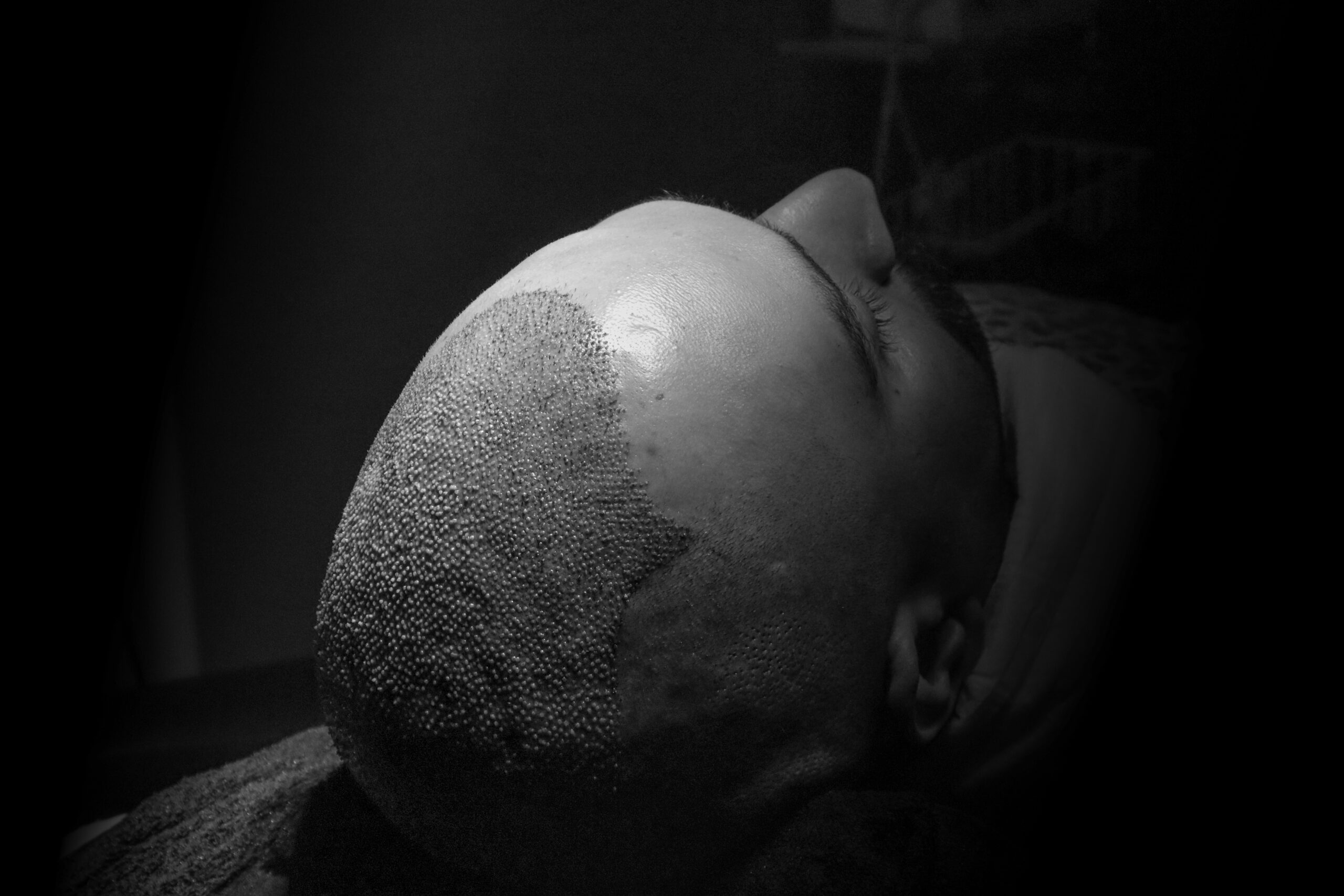
From the patient’s perspective, recovery after FUE and DHI is broadly similar. The first week involves the same elevated sleeping position, the same careful washing protocol, the same avoidance of physical activity and direct sun exposure, the same progression from scabbing to gradual healing.
The differences that do exist are subtle. DHI patients who have undergone the procedure without recipient area shaving tend to find their early recovery slightly less visually obvious to others — the existing hair in the recipient zone provides some concealment of the transplanted area during the first weeks. This doesn’t change the biological healing process, but it can reduce the social self-consciousness of the recovery period.
Donor area recovery is identical between the two techniques, since extraction is performed the same way in both.
The hair transplant timeline for growth and maturation is the same regardless of technique. Shedding occurs in weeks two through eight. Early regrowth appears around months three to five. Density development continues through months six to twelve. Technique choice does not meaningfully alter this timeline.
Which Patients Are Better Suited to FUE
Certain patient profiles consistently benefit more from FUE — particularly Sapphire FUE — than from DHI.
Patients with advanced hair loss across large areas are the clearest example. When the goal is to cover significant baldness across the crown, mid-scalp, and hairline in a single comprehensive session, FUE’s efficiency across wide recipient zones is a practical advantage. The ability to plan and create all channels before implantation begins allows the surgeon to visualize the complete design and make adjustments before any graft is committed to a position.
Patients who need a very high graft count in one session — sometimes upwards of 3,000 to 4,000 grafts — are generally better served by FUE’s workflow, which is more efficient at scale than the individual Choi pen loading process of DHI.
Patients who are fully comfortable with shaving the recipient area and are primarily focused on maximum coverage in a single procedure will typically find that Sapphire FUE offers everything they need without the additional complexity of DHI.
Which Patients Are Better Suited to DHI
DHI consistently shows advantages in a different set of patient scenarios.
Patients with mild to moderate thinning who still have significant native hair in the recipient zone are the clearest DHI candidates. The ability to implant between existing follicles without shaving, with the precision of the Choi pen, makes DHI particularly effective for adding density to areas that have thinned but haven’t reached complete baldness. Disruption to existing hair is minimized, and the procedure can be concealed more easily during recovery.
Patients who are not able to shave their heads for professional or personal reasons — and whose hair loss pattern makes the no-shave option viable — will find DHI the more practical choice.
Patients requiring very precise, targeted work in a specific zone — a hairline refinement, a localized density improvement, a specific area of concern — benefit from the single-motion precision of Choi pen implantation, which allows extremely controlled placement of individual grafts.
Younger patients with early-stage loss who want to address specific concerns without a dramatic change in appearance during recovery often find DHI more manageable from a social and professional standpoint during the healing period.
The Surgeon’s Role Is More Important Than the Technique
This is the point that gets lost most easily in the FUE versus DHI conversation, and it’s arguably the most important one.
Both techniques, in the hands of an experienced, skilled surgeon with a well-trained team, produce excellent results. Both, in the hands of someone less experienced or working in a clinic where corners are cut, can produce disappointing ones.
The naturalness of a hairline, the appropriate distribution of grafts, the angle and direction of implantation, the management of the donor area — these are determined by the surgeon’s judgment, experience, and aesthetic sensibility. They are not properties of the technique itself.
A DHI procedure at a clinic with outstanding clinical standards will outperform an FUE procedure at a clinic with poor protocols — and vice versa. The technique is a tool. The result is determined by who is using it, how, and with what level of care.
This is why the most important question in any hair transplant consultation is not “which technique do you use?” It’s “how do you decide which technique is right for my specific situation, and why?”
Making the Decision
When you sit across from a surgeon at Hairpol or any reputable clinic and the technique conversation comes up, the framework for thinking about it should be straightforward.
If you have significant hair loss across a large area and need comprehensive coverage, Sapphire FUE is likely the more appropriate tool for the scale of what you need.
If you have existing hair in the recipient zone that you want to preserve and build on, if you need precision density work in specific zones, or if shaving the recipient area is a significant practical concern, DHI is worth serious consideration.
If you’re somewhere in between — moderate loss, existing hair in some zones but not others, a combination of coverage and density goals — the answer may be a hybrid approach, or a clear recommendation from a surgeon who has evaluated your specific scalp characteristics.
What should not drive the decision is price difference alone, marketing language about one technique being superior to the other in absolute terms, or a clinic that recommends the same technique to every patient regardless of their individual situation.
Your hair loss is specific to you. The technique used to address it should be specific to you too.
