
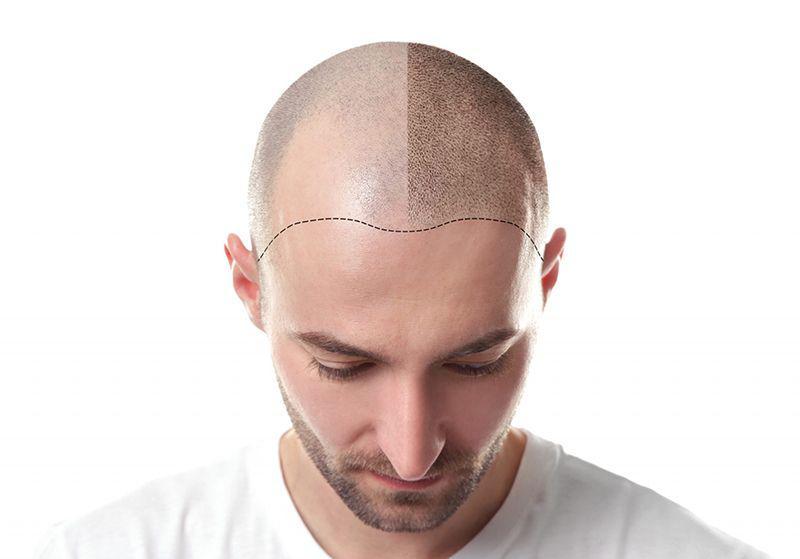
Scarring is one of the most common concerns patients raise before a hair transplant — and one of the topics most often addressed with vague reassurance rather than specific information. The honest picture is more nuanced than either “there’s no scarring” or “you’ll have visible scars.” What actually happens in the donor area and recipient area depends on the technique used, the quality of the surgical execution, individual healing characteristics, and how the recovery period is managed.
Understanding exactly what to expect — and what influences how visible any scarring will be — is more useful than general reassurance. This guide covers both areas specifically, explains how different techniques produce different scar profiles, and gives you an honest framework for evaluating what the healing process will look like in your specific situation.
Why Hair Transplants Don’t Leave the Scars People Fear
The most common image people have of hair transplant scarring comes from the older FUT — follicular unit transplantation — strip method, in which a linear strip of scalp was surgically removed from the donor area, leaving a visible linear scar across the back of the head. This scar could be concealed when hair was worn long but became visible when hair was cut short, limiting styling options permanently.
Modern techniques — specifically FUE and DHI — work completely differently. Instead of removing a strip of scalp, individual follicular units are extracted one by one using a small punch instrument, leaving tiny circular wounds rather than a linear incision. This fundamental difference in extraction method is why modern hair transplants are associated with a dramatically different — and far more acceptable — scar profile than the older technique.
Donor Area Scarring: What FUE and DHI Actually Leave Behind
In FUE and DHI procedures, each follicular unit is extracted using a circular punch instrument typically between 0.7 and 1.0 millimeters in diameter. Each extraction leaves a tiny circular wound that heals to form a small round scar — essentially a dot rather than a line.
In the immediate post-procedure period, the donor area looks like it has small red dots across it, occasionally with minor crusting at each extraction site. This is normal and resolves within the first week to ten days as the small wounds close. By two weeks, the donor area typically looks close to normal from a normal viewing distance, with the tiny healing sites no longer visibly red or crusted.
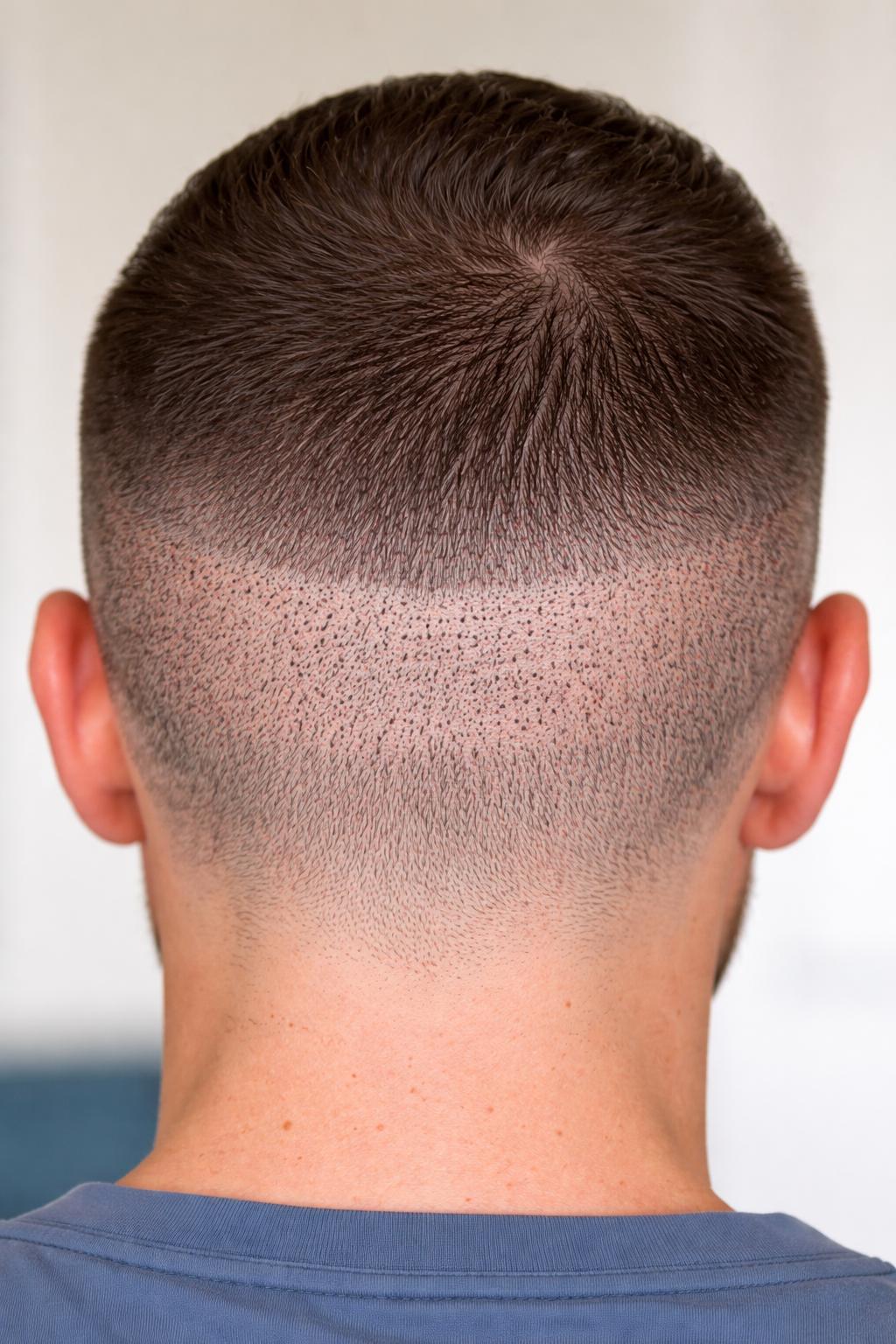
Once healed — typically by weeks three to four — the extraction sites leave very small circular scars, often described as white dots. These dots are typically between 0.5 and 1.0 millimeters in diameter and are spread across the donor area. Under normal conditions, with hair at its natural growing length, these dots are essentially invisible. The hair growing around each extraction site covers them completely.
The critical variable for FUE donor area scarring is hair length. When hair in the donor area is cut very short — to a number one or number zero guard, or shaved completely — the dots can become faintly visible under close inspection in good lighting. For most patients with normally pigmented skin and hair, even at short hair lengths the dots are not readily apparent to others in normal social interaction. They require close examination to detect.
Several factors influence how visible donor area dots are:
Extraction density is the most significant. When too many follicles are extracted from a concentrated area — a practice called over-harvesting — the density of dots in that zone increases to a point where visible thinning occurs. A well-planned procedure distributes extractions evenly across the donor area, maintaining a density that keeps the dots dispersed and the overall donor appearance natural. Over-harvested donor areas can show visible thinning even at normal hair lengths, which is a genuine and permanent cosmetic problem that careful surgical planning is specifically designed to prevent.
Punch size affects scar size directly. Smaller punch instruments leave smaller wounds that heal to smaller dots. Modern instruments at the lower end of the size range produce scars that are barely visible even at very short hair lengths. Larger punches leave more visible dots.
Individual healing characteristics vary. Some patients heal with very minimal scarring at extraction sites. Others develop slightly more visible marks at the same sites. This variation is partly genetic and partly related to skin type, with darker skin tones sometimes developing more pronounced post-inflammatory changes at healing sites.
Skin tone contrast matters. The small white circular scars that form at extraction sites are more visible against darker skin than against lighter skin, simply because the contrast between the scar color and the surrounding skin is greater.
How Sapphire FUE Affects Donor Area Healing
The donor area extraction process is the same in standard FUE, Sapphire FUE, and DHI — the sapphire blade distinction applies to recipient channel creation, not to the donor extraction punch. So in terms of donor area scar profile, these techniques are equivalent.
The meaningful difference that Sapphire FUE makes is in the recipient area, as discussed below.
Recipient Area Scarring: What Happens Where the Hair Is Implanted
The recipient area — the scalp where grafts are implanted — involves a different kind of wound and a different healing process than the donor area.
In standard FUE, the surgeon creates small incisions or channels in the recipient area using a steel blade. Each channel is essentially a tiny incision that receives a graft. The healing of these incisions follows a predictable course: initial redness and crusting in the first one to two weeks, progressive healing through weeks two to four, and full surface healing typically by weeks three to five. The small scabs that form around each implanted graft are a normal part of this process and shed gradually as healing progresses.
In Sapphire FUE, the recipient channels are created with sapphire-tipped blades rather than steel. The sapphire surface is significantly harder and smoother than steel, producing incisions with cleaner edges and less surrounding tissue trauma. This reduced tissue trauma translates directly into less recipient area redness, less crusting, and faster resolution of the visible signs of the healing process. For patients concerned about how the recipient area looks during recovery, Sapphire FUE’s faster healing is a genuine practical advantage.
In DHI, the Choi implanter pen simultaneously creates the channel and deposits the graft in a single motion, eliminating the separate channel-creation phase. This also reduces surface trauma in the recipient area, and DHI patients often report that their recipient area heals with slightly less crusting than standard FUE.
Once the recipient area has healed — typically by weeks three to five — the small incisions leave essentially no visible scarring under normal circumstances. The healed channels are microscopic in size and are quickly covered by the growing transplanted hair as it enters its growth phase. The recipient area, once recovery is complete, looks like normal scalp with growing hair rather than like a scarred surface.
The Scabs: What They Are and How to Manage Them
The most visible aspect of healing in the recipient area is the formation of small scabs around each implanted graft in the first week to ten days. These scabs form as the body’s normal response to the small wounds created during implantation and are an expected, normal part of the healing process rather than a sign of anything going wrong.
Scabs typically begin appearing within the first two to three days and are most prominent around days four to seven. They gradually loosen and shed through the first two weeks with proper washing. By day ten to fourteen, most patients find that the majority of scabs have cleared, revealing the healed recipient area beneath.
The management of scabs during this phase significantly affects how the healing process progresses. Aggressive removal of scabs before they are ready to shed naturally risks dislodging grafts that are still in the process of integrating into the surrounding tissue. The appropriate approach is gentle washing according to the clinic’s protocol — usually a specific method using a gentle stream of water rather than direct friction — which loosens scabs gradually without force.
Attempting to manually pick or scratch off scabs, rubbing the recipient area, or using water pressure directly on the healing area during the first week all carry risk of graft loss. The patience required to allow scabs to shed naturally over ten to fourteen days rather than removing them forcibly is one of the most important elements of aftercare.
Redness: How Long It Lasts and What Affects It
Redness in the recipient area after a hair transplant is normal and universal. Its duration is one of the most variable aspects of recovery and one of the questions patients ask most frequently.
For most patients, visible redness in the recipient area begins fading significantly by weeks two to three and continues improving through weeks four to six. By month two, most patients find that recipient area redness has resolved to a level that is not noticeable to others in normal interaction. Some patients, particularly those with lighter or more sensitive skin, may have some residual pinkness through month three.
Several factors affect how long redness persists:
Procedure technique influences redness duration meaningfully. Sapphire FUE and DHI both produce less recipient area trauma than standard steel-blade FUE, which translates directly into faster redness resolution. Patients treated with these techniques typically find their redness clears faster than the general timeline suggests.
Sun exposure during the healing phase significantly prolongs redness. UV radiation on healing scalp tissue maintains inflammation that would otherwise be resolving, effectively extending the period of visible redness. Protecting the recipient area from direct sun during the first two to three months is one of the most practical steps patients can take to minimize redness duration.
Skin type plays a role. Patients with naturally fair or sensitive skin tend to experience more prolonged redness than those with more resilient skin types.
Procedure density is also relevant. High-density procedures that pack grafts closely together in the recipient zone create more cumulative tissue trauma, which produces more pronounced and longer-lasting redness than more spaced procedures.
Hyperpigmentation: The Scar Outcome Nobody Mentions
One aspect of hair transplant scarring that receives less attention than it deserves is the potential for hyperpigmentation — areas of darkened skin — in the recipient or donor areas following the procedure.
Hyperpigmentation occurs when the healing process triggers excess melanin production in the healing tissue. In the recipient area, this can produce patches of slightly darker scalp skin around the healed graft sites. In the donor area, extraction sites can heal to slightly darker dots rather than the more typical lighter circular scars, particularly in patients with darker skin tones.
The most common cause of post-procedure hyperpigmentation is UV exposure during the healing phase. UV radiation stimulates melanocytes in healing tissue in ways that differ from their behavior in intact skin, producing uneven pigmentation responses that can be more pronounced and longer-lasting than in fully healed skin.
Post-inflammatory hyperpigmentation from a hair transplant is not permanent in most cases, but it can persist for several months and is worth taking seriously as a reason to protect the healing scalp from sun exposure. For patients with darker skin tones, the risk of noticeable hyperpigmentation is higher and the duration of any pigmentation changes longer than in lighter-skinned patients.
Consistent use of sun protection during the first three months — primarily through hat use, as sunscreen is not appropriate on the recipient area during the earliest healing phase — is the most effective way to minimize hyperpigmentation risk.
The Donor Area After Full Healing: What It Realistically Looks Like
By the time the donor area has fully healed — typically at around four to six weeks — the realistic picture for most patients is as follows.
At normal hair lengths worn by most men — a grade two to three or longer — the donor area looks entirely normal. The tiny extraction site dots are covered by surrounding hair and not visible. There is no evidence of the procedure in the donor area under normal viewing conditions.
At very short hair lengths — grade one or shorter — small white dots may be faintly visible under close examination in good lighting. For most patients, these dots are still not obvious in normal social interaction and require deliberate close inspection to detect. The degree of visibility varies with extraction density and individual healing characteristics.
Patients who want to wear their hair very short — buzz cut or shorter — should discuss this preference explicitly during consultation, as it affects decisions about extraction density, punch size, and the distribution pattern of harvesting across the donor area. A procedure planned with short hair styling in mind can minimize dot visibility even at short lengths through appropriate harvesting strategy.
Long-Term Scar Appearance: What Changes Over Years
Both donor and recipient area healing continues to improve beyond the initial six to eight week recovery period. Hair transplant scars, like all surgical scars, mature over time.
Donor area extraction dots that appear faintly visible at three months typically become less visible at six months and minimally apparent at twelve months as the scar tissue matures and lightens. The maturation process for small round scars generally results in reduced visibility over time rather than increased visibility.
Recipient area healing similarly continues improving through the first year. Any residual pinkness or minor irregularity in the scalp surface typically resolves as growing hair increasingly covers and softens the appearance of the healed tissue.
The long-term picture for patients who had well-executed procedures with appropriate harvesting density and good recovery management is a donor area that is undetectable at normal hair lengths and a recipient area that is entirely hidden by the growing transplanted hair.
When Scarring Becomes a Problem
While the typical hair transplant scar outcome is minimal and well-tolerated, certain circumstances produce more problematic results that are worth understanding.
Over-harvesting is the most significant cause of unacceptable donor area appearance. When too high a proportion of donor follicles are extracted from a concentrated zone, the resulting dot density exceeds what the remaining hair can cover. The donor area develops visible thinning or patchiness that is apparent even at normal hair lengths. This is a permanent cosmetic problem that is difficult to correct and results directly from inadequate surgical planning around harvesting density limits.
Keloid formation is a rare but serious complication in patients who have a genetic tendency to form keloid scars — raised, thickened scars that extend beyond the original wound boundaries. Keloid formation at donor extraction sites or recipient area implantation sites can produce raised, visible, and uncomfortable scars that are worse in appearance than the original hair loss. Patients with a documented history of keloid formation require careful assessment before any hair transplant procedure, and many experienced surgeons consider established keloid tendency a contraindication to the procedure.
Infection during the healing phase can compromise the quality of scar formation in both the donor and recipient areas. Infected healing sites are more likely to produce visible, irregular scarring than clean-healing sites. This is one of the clinical reasons why proper aftercare — keeping the scalp clean, following the washing protocol, avoiding environments with high bacterial exposure in the first two weeks — directly affects the long-term scar outcome.
Practical Steps to Minimize Scarring
While much of the scar outcome is determined by surgical technique and individual biology, patient behavior during recovery meaningfully influences how healing proceeds and what the final scar appearance looks like.
Protecting the scalp from direct sun exposure during the first three months is the single most impactful step patients can take to minimize both recipient area redness duration and hyperpigmentation risk. A loose hat that doesn’t compress the recipient area provides effective protection without any risk to healing grafts.
Following the washing protocol provided by the clinic reduces the crusting and bacterial accumulation that can complicate healing. Gentle, consistent washing from day three or four onward — using the method the clinic recommends rather than normal shampooing — keeps the healing area clean while avoiding the mechanical disruption that could dislodge grafts or damage healing tissue.
Avoiding smoking during the recovery period supports better wound healing. Nicotine constricts blood vessels and impairs the oxygen delivery to healing tissue that is essential for quality scar formation. Smoking during the critical early healing phase is associated with slower wound closure and poorer healing quality across surgical procedures generally.
Maintaining adequate nutritional status supports healing quality throughout the recovery period. Protein provides the building blocks for tissue repair. Vitamin C is specifically required for collagen synthesis — the structural protein that forms the matrix of scar tissue. Zinc supports the enzymatic processes involved in wound healing. These are not marginal considerations — nutritional status at the time of healing directly influences the quality of the scar tissue that forms.
What to Ask Your Surgeon About Scarring
Before committing to a hair transplant, specific questions about the scar profile of the planned procedure give you a more accurate picture of what to expect than general reassurance.
What punch size will be used for extraction, and what does that mean for the size of the dots left in the donor area? How many grafts are planned, and at what harvesting density across the donor area? Can results be seen from previous patients at the hair lengths you typically wear? How does the clinic’s approach account for your skin tone and healing characteristics?
If you want to wear your hair very short, say so explicitly and ask how the harvesting plan accounts for this. A surgeon who adjusts their approach for short-hair patients — distributing extractions more evenly, using smaller punches, staying well within density limits — is demonstrating the kind of patient-specific planning that produces the best cosmetic outcomes.
At Hairpol, scarring outcomes are discussed as part of every consultation because the details of how a procedure is planned directly affect how the donor and recipient areas look both during recovery and years later. A well-planned procedure with appropriate technique leaves behind results that are both permanent in the ways that matter and invisible in the ways that matter.
Find this helpful? Add Hairpol as a preferred source on Google.
Get a Free Consultation
Answer a few questions and the medical team will review your situation.
